After watching the Pretenders on the Concert for Kampuchea I’ve been listening to Pretenders lately. The original band was something special. The original band was James Honeyman-Scott (lead guitar, backing vocals, keyboards), Pete Farndon (bass guitar, backing vocals), and Martin Chambers (drums, backing vocals, percussion)…and of course Chrissie Hynde.
Following the drug-related deaths of Honeyman-Scott and Farndon, the band experienced numerous subsequent personnel changes. Hynde has been the band’s only consistent member.
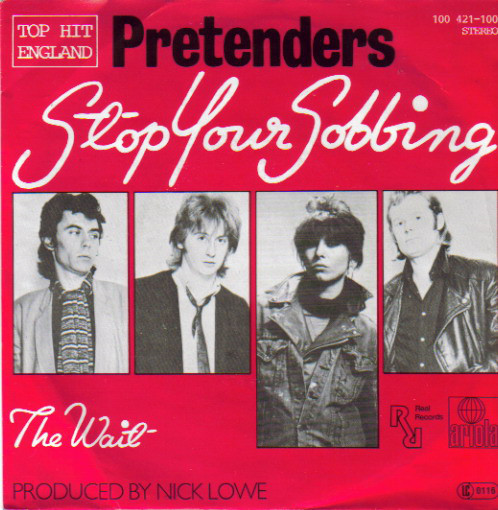
Written by Ray Davies and recorded for The Kinks’ 1964 self-titled debut album, this was later covered by The Pretenders as their first single. The Pretenders’ recording of the song led to the relationship between Davies and the band’s frontwoman Chrissie Hynde.
In order to convince guitarist James Honeyman-Scott to join The Pretenders, Chrissie Hynde hired one of his favorite recording artists, Nick Lowe, to produce this song.
This song peaked at #65 in the Billboard 100 and #34 in the UK in 1980.
From Songfacts
In his autobiography, Ray Davies writes of a girlfriend who may have been the subject of this song: “Her sobbing was making me feel guilty and I told her to stop… there was something so desperately lonely about her.”
The Pretenders covered another Ray Davies penned track a couple of years later, “I Go To Sleep,” for another single release.
Stop Your Sobbing
It is time for you to stop all of your sobbing Yes it’s time for you to stop all of your sobbing oh oh oh There’s one thing you gotta do To make me still want you Gotta stop sobbing now Yeah yeah stop it stop it
It is time for you to laugh instead of crying Yes it’s time for you to laugh so keep on trying oh oh oh There’s one thing you gotta do To make me still want you Gotta stop sobbing now Yeah yeah stop it stop it
Each little tear that falls from your eyes Makes, makes me want To take you in my arms and tell you To stop all your sobbing
There’s one thing you gotta do To make me still want you And there’s one thing you gotta know To make me want you so Gotta stop sobbing now Yeah yeah stop, stop, stop, stop Gotta stop sobbing at all Stop, stop, stop, stop Gotta stop sobbing at all Stop, stop, stop, stop Gotta stop sobbing at all Stop, stop, stop, stop Stop, stop, stop sobbing Stop, stop, stop, stop Gotta stop sobbing Stop, stop, stop, stop Gotta stop sobbing at all Stop, stop, stop, stop Gotta stop sobbing at all
This very well may be the very first Punk record. The simple riff was raw and cutting and like Louie, Louie and Wild Thing…became a staple of garage bands forever. This song was the first hit for The Kinks. Before releasing it, they put out two singles that flopped: a cover of “Long Tall Sally” and a Ray Davis composition called “You Still Want Me.”
The sound of the guitar was revolutionary. Dave Davies got the dirty guitar sound by slashing the speaker cone on his amplifier with a razor blade. The vibration of the fabric produced an effect known as “fuzz,” which became common as various electronic devices were invented to distort the sound. At the time, none of these devices were available to Dave, so Davies would mistreat his amp to get the desired sound, often kicking it.
Ray Davies wrote this with the intention of making it a big crowd-pleaser for their live shows. He was trying to write something similar to “Louie Louie,” which was a big hit for The Kingsmen.
The song peaked at #7 in the Billboard 100 and #1 in the UK in 1964.
From Songfacts
Kinks frontman Ray Davies wrote the lyric to this rambunctious rocker after watching girls dancing in a club. It’s not the most articulate lyric, but that’s the point: The guy in the song is so infatuated, all he can do is mutter at the girl how she’s really got him.
In 2015, he told Rolling Stone: “I just remembered this one girl dancing. Sometimes you’re so overwhelmed by the presence of another person and you can’t put two words together.”
Davies expanded on the song’s inspiration during a 2016 interview with Q magazine: “I was playing a gig at a club in Piccadilly and there was a young girl in the audience who I really liked. She had beautiful lips. Thin, but not skinny. A bit similar to Françoise Hardy. Not long hair, but down to about there (points to shoulders). Long enough to put your hands through… (drifts off, wistfully)… long enough to hold. I wrote ‘You Really Got Me’ for her, even though I never met her.”
According to Dave, the amp slashing happened in his bedroom in North London when he was irate – he had gotten his girlfriend, Sue Sheehan, pregnant, and their parents wanted to keep them from getting married. Instead of doing self harm, he used the blade on the amp to channel his rage. The amp was a cheap unit called an Elpico that had been giving him problems – he decided to teach it a lesson!
In the studio, the wounded Elpico was hooked into a another amp, which Dave recalls as a Vox AC30 and producer Shel Talmy remembers as a Vox AC10. The sound they got changed the course of rock history, becoming the first big hit to use distortion.
Davies and Sheehan stayed apart, but she had the baby, a girl named Tracey who finally met her father until 1993.
If “You Really Got Me” didn’t sell, there was a good chance their record label would have dropped them, but the song gave them the hit they were looking for. Soon they were making TV appearances, gracing magazine covers, and playing on bills with The Beatles as an opening act. They didn’t have an album out when the song took off, so they rushed one out to capitalize on the demand. This first, self-titled album has just five originals, with the rest being R&B covers – standard practice at the time for British Invasion bands.
The Kinks recorded a slower version with a blues feel on their first attempt, but hated the results. Ray Davies thought it came out clean and sterile, when he wanted it to capture the energy of their live shows. Dave Davies’ girlfriend backed them up, saying it didn’t make her want to “drop her knickers.”
The Kinks’ record company had no interest in letting them re-record the song, but due to a technicality in their contract, they were able to withhold the song until they could do it again. At the second session, Dave Davies used his slashed amp and Talmy produced it to get the desired live sound. This is the version that was released. Talmy liked the original: He claimed it would also have been a hit if it was released.
Ray Davies came up with famous riff on the piano at the family home. He played it for Dave, who transposed it to guitar. Their first version was 6-minutes long, but the final single release came in at just 2:20.
The first line was originally “you, you really got me going.” Ray Davies changed it to “girl, you really got me going” at the suggestion of one of their advisers. The idea was to appeal to the teenage girls in their audience.
The final version of the song was recorded in July 1964, with Ray Davies on lead vocals, Dave Davies on guitar, and Pete Quaife on bass.
The Kinks didn’t have a drummer when they first recorded the song a month earlier, so producer Shel Talmy brought in a session musician named Bobby Graham to play. When they recorded it the second time in July, Mick Avory had joined the band as their drummer, but Talmy didn’t trust him and made him play tambourine while Graham played drums. A session musician named Arthur Greenslade played piano, and Jon Lord, years before he became a member of Deep Purple, claimed he played keyboards. Lord recalled with a laugh to The Leicester Mercury in 2000: “All I did was plink, plink, plink. It wasn’t hard.”
Released in the UK on August 4, 1964, “You Really Got Me” climbed to #1 on September 16, where it stayed for two weeks. In America, it was released in September and reached a peak of #7 in November.
Ray Davies is the only songwriter credited on this track, even though his brother Dave came up with the signature guitar sound. This was one of many friction points for the brothers, who are near the top of any list of the most combative siblings in rock. When they recorded the song, Ray was 22 and Dave was 17.
Shel Talmy, who produced this track, came to England from California and brought many American recording techniques with him. To get the loud guitar sound on “You Really Got Me,” he recorded the guitar on two channels, one with distortion, the other without. When combined in the mix, the result was a loud, gritty sound that popped when it came on the radio.
“I was using some techniques I worked out on how to get a raunchier sound with distortion,” Talmy said in a Songfacts interview. “It wasn’t that difficult because I had done it before in America.”
Talmy added: “It helped that Dave was as good as he was, and that he was quite happy to listen.”
Talmy later produced the first album for The Who, My Generation.
It was rumored that Jimmy Page, who was a session musician at the time, played guitar on this track, which the band stridently denied. According to producer Shel Talmy, Page didn’t play on this song but did play rhythm guitar on some album tracks because Ray Davies didn’t want to sing and play guitar at the same time.
Ray Davies took pains to make sure we could understand the words. “I made a conscious effort to make my voice sound pure and I sang the words as clearly as the music would allow,” he said.
A 1978 cover of this song was the first single for Van Halen, who played lots of Kinks songs in their early years doing club shows. Eddie Van Halen spent the next several years developing new guitar riffs, and like Davies, was known to manipulate his equipment to get just the right sound.
The powerful rhythm guitar riff was very influential on other British groups. The Rolling Stones recorded “Satisfaction,” which was driven by the rhythm guitar, a year later.
According to Ray Davies, there was a great deal of jealousy among their peers when The Kinks came up with this song. He said in a 1981 interview with Creem: “There were a lot of groups going around at the time – the Yardbirds, the Kinks, the Rolling Stones – and nobody had really cracked with a sort of R&B #1 record. The songs were always sort of like The Beatles. When we first wanted to do a record, we couldn’t get a recording gig. We were turned down by Decca, Parlophone, EMI and even Brian Epstein came to see us play and turned us down. So I started writing songs like ‘You Really Got Me,’ and I think there was a sheer jealousy that we did it first. Because we weren’t a great group – untidy – and we were considered maybe a bit of a joke. But for some reason, I’d just had dinner, shepherd’s pie, at my sister’s house, and I sat down at the piano and played da, da, da, da, da. The funny thing is it was influenced by Mose Allison more than anybody else. And I think there was a lot of bad feeling. I remember we went to clubs like the Marquee, and those bands wouldn’t talk to us because we did it first.”
The Kinks’ next single was “All Day And All Of The Night,” which was basically a re-write of this song, but was also a hit.
In a Rolling Stone interview, Ray said that they “evolved” the sound by putting knitting needles in the speakers when recording this song. That statement prompted a rebuttal from his brother Dave, who wrote in to explain: “I alone created the guitar sound for the song with my Elpico amp that I bought. I slashed the speaker with a razor blade, which resulted in the ‘You Really Got Me’ tone. There were no knitting needles used in making my guitar sound.”
One of the many things the Davies brothers disagree on is the Van Halen cover. Ray loves it. He told NME it is his favorite Kinks cover. “It was a big hit for them and put them on a career of excess and sent them on the road. So I enjoyed that one.”
Dave Davies is not a fan. He told Rolling Stone: “Our song was working-class people trying to fight back. Their version sounds too easy.”
The Who played this at many of their early concerts. Their first single was “I Can’t Explain,” also produced by Shel Talmy with a sound clearly borrowed from “You Really Got Me,” as Pete Townshend played a dirty guitar riff similar to what Dave Davies’ did.
You Really Got Me
Girl, you really got me goin’ You got me so I don’t know what I’m doin’ now Yeah, you really got me now You got me so I can’t sleep at night
Yeah, you really got me now You got me so I don’t know what I’m doin’ now Oh yeah, you really got me now You got me so I can’t sleep at night
You really got me You really got me You really got me
See, don’t ever set me free I always want to be by your side Girl, you really got me now You got me so I can’t sleep at night
Yeah, you really got me now You got me so I don’t know what I’m doin’ now Oh yeah, you really got me now You got me so I can’t sleep at night
You really got me You really got me You really got me Oh no
See, don’t ever set me free I always want to be by your side Girl, you really got me now You got me so I can’t sleep at night
Yeah, you really got me now You got me so I don’t know what I’m doin’ now Oh yeah, you really got me now You got me so I can’t sleep at night
You really got me You really got me You really got me
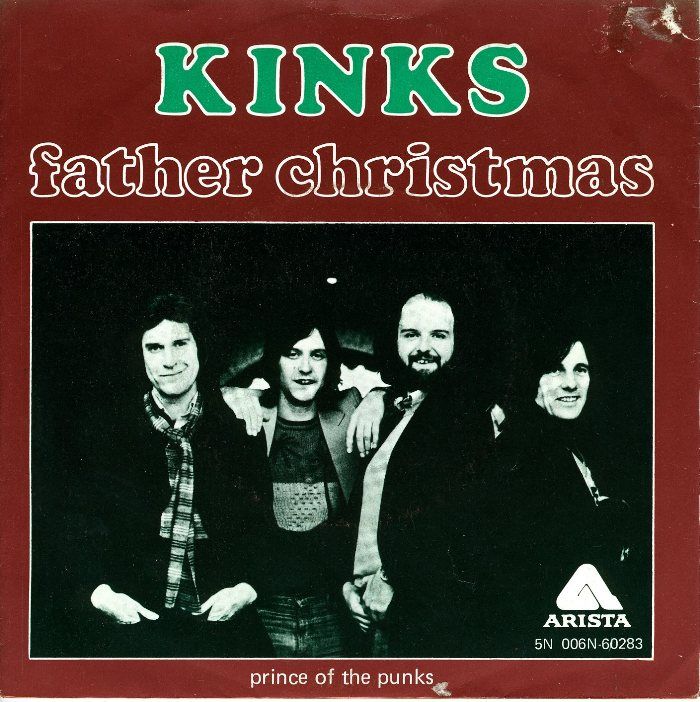
Father Christmas, give us some money We’ll beat you up if you make us annoyed Father Christmas, give us some money Don’t mess around with those silly toys
I’ve always like this raw and rough Christmas song. A writer at the NME wrote “”Successful Xmas songs are more about mood than specifics, but as this is an anti-Christmas song, it’s fine.” This is the kind of song you would expect from Ray Davies. Anti-Christmas or not…it has become a popular classic Christmas song that gets airplay every year.
The single was released during the height of punk rock and certainly exudes a punk attitude. Dave Davies told ABC Radio that he “always thought The Ramones would do a great version of it. I don’t know why they didn’t do it.”… thinking about it…Dave was right…it would have fit them perfectly.
The song was released in 1977 with the B side Prince Of The Punks. The track was included on the Arista compilation Come Dancing with The Kinks and is also available as a bonus track on the CD reissue of the Kinks’ 1978 album Misfits.
From Songfacts
“Father Christmas” is the name used in The UK and Australia for Santa Claus. This song is about a kid whose Christmas experience is a bit unusual. He never believed in Father Christmas, but finds himself performing as the character, and gets mugged by kids who tell him they want his money, not toys. He asks that if Father Christmas does exist, he bring a job for his dad and a machine gun so he can scare off the kids who mugged him.
This song is played in the background at the end of the movie Step Brothers as the camera is slowly zooming in on the family during The Holidays.
Ray Davies frequently stole shows by performing the song live wearing a Santa costume. “When the record came out we were on tour with a very successful band at the time supporting them,” he recalled during an interview with Southern California radio station KSWD. “I went on dressed as Santa at the end of the show to do ‘Father Christmas.’ And the other band found it hard to follow us. The following night with the same band I went to run on but there was a bunch of heavies preventing me from running on stage. And I was protesting. But the people said, ‘The Kinks didn’t do an encore but Santa Claus was there and they were stopping him from going on stage.'”
In England, Father Christmas is the personification of Christmas, in the same way as Santa Claus is in the United States. Although the characters are now synonymous, historically Father Christmas and Santa Claus have separate entities, stemming from unrelated traditions.
First written about in Tudor England and pre-dating the first recording of Santa Claus, Father Christmas was a jolly, well-nourished man who typified the spirit of good cheer at Christmas, bringing peace, joy, good food and wine and revelry. In time, the tradition merged with America’s Santa Claus with both riding in a reindeer-pulled sleigh carrying a sackful of toys that lands on the roofs of houses that contain good children. The mythical, white bearded Santa/Father Christmas then enters the properties through their chimneys clutching gifts for the well-behaved little ones inside.
Father Christmas
When I was small I believed in Santa Claus Though I knew it was my dad And I would hang up my stocking at Christmas Open my presents and I’d be glad
But the last time I played Father Christmas I stood outside a department store A gang of kids came over and mugged me And knocked my reindeer to the floor
They said Father Christmas, give us some money Don’t mess around with those silly toys We’ll beat you up if you don’t hand it over We want your bread so don’t make us annoyed Give all the toys to the little rich boys
Don’t give my brother a Steve Austin outfit Don’t give my sister a cuddly toy We don’t want a jigsaw or monopoly money We only want the real mccoy
Father Christmas, give us some money We’ll beat you up if you make us annoyed Father Christmas, give us some money Don’t mess around with those silly toys
But give my daddy a job ’cause he needs one He’s got lots of mouths to feed But if you’ve got one I’ll have a machine gun So I can scare all the kids on the street
Father Christmas, give us some money We got no time for your silly toys We’ll beat you up if you don’t hand it over Give all the toys to the little rich boys
Have yourself a merry merry Christmas Have yourself a good time But remember the kids who got nothin’ While you’re drinkin’ down your wine
Father Christmas, give us some money We got no time for your silly toys Father Christmas, please hand it over We’ll beat you up so don’t make us annoyed
Father Christmas, give us some money We got no time for your silly toys We’ll beat you up if you don’t hand it over We want your bread so don’t make us annoyed Give all the toys to the little rich boys
This song faced censorship on less common ground than most. I would have thought the subject line would have caused problems…but no. The original studio recording contained the word “Coca-Cola” in the lyrics, which violated BBC Radio’s policy against product placement.
The songwriter, Ray Davies, was forced to interrupt the Kinks’ American tour so he could change the lyric to “cherry cola” for the single’s release. He made a 6,000 mile round trip flight from New York to London and back just for this purpose.
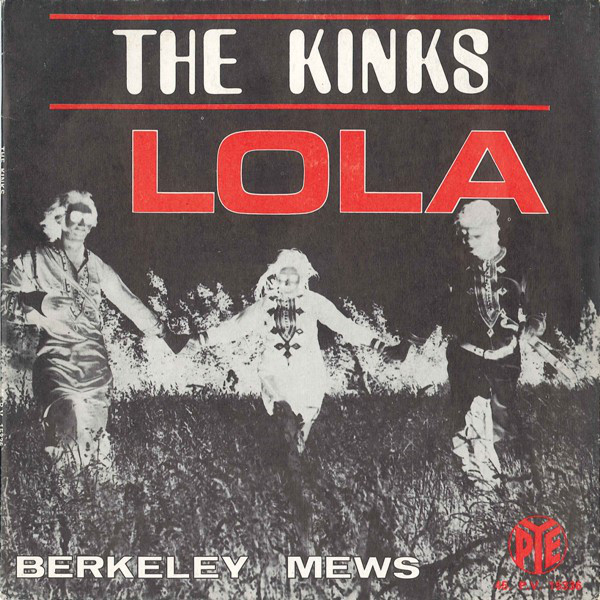
The song peaked at #9 in the Billboard 100, #2 in the UK, #1 in New Zealand and #2 in the UK in 1970.
Ray Davies: “‘Lola’ was a love song, and the person they fall in love with is a transvestite. It’s not their fault – they didn’t know – but you know it’s not going to last. It was based on a story about my manager.”
“The subject matter was concealed,” It’s a crafty way of writing. I say, ‘She woke up next to me,’ and people think it’s a woman. The story unfolds better than if the song were called ‘I Dated a Drag Queen.'”
From Songfacts
This song is about a guy who meets a girl (Lola) in a club who takes him home and rocks his world. The twist comes when we find out that Lola is a man.
As stated in The Kinks: The Official Biography, Ray Davies wrote the lyrics after their manager got drunk at a club and started dancing with what he thought was a woman. Toward the end of the night, his stubble started showing, but their manager was too tanked to notice.
Ray Davies revealed to Q magazine in a 2016 interview: “The song came out of an experience in a club in Paris. I was dancing with this beautiful blonde, then we went out into the daylight and I saw her stubble. “
He added; “So I drew on that but colored it in, made it more interesting lyrically.”
The Kinks came up with the riff after messing around with open strings on guitars. The group’s guitarist, Dave Davies, contended that he deserved a songwriting credit on the track, leading to additional friction with his brother Ray, who got the sole composer credit.
This revived the career of The Kinks, at least in America where their popularity was fading. Their previous Top 40 in the States was “Sunny Afternoon” in 1966.
Ray Davies said: “I wrote Lola to be a great record, not a great song. Something that people could recognize in the first five seconds. Even the chorus, my two-year-old daughter sang it back to me. I thought, ‘This must catch on.'”
The line “You drink champagne and it tastes just like cherry cola” was recorded as “it tastes just like Coca-Cola.” The British Broadcasting Company (BBC) refused to play it because of the commercial reference, so Ray Davies flew from New York to London to change the lyric and get the song on the air.
There was speculation, fueled by a 2004 piece in Rolling Stone magazine, that this song was inspired by the famous transgender actress Candy Darling, who Kinks lead singer Ray Davies allegedly dated for a brief time. This is the same Candy mentioned in Lou Reed’s “Walk On The Wild Side” (“Candy came from out on the island, in the backroom she was everybody’s darling”)
The Kinks’ fans were not the type of people who would relate to a transvestite, but they loved this. It opened the door for artists like Lou Reed and David Bowie to explore homosexuality in songs that straight people liked too.
Weird Al Yankovic recorded a parody of this song entitled “Yoda” (based on the Star Wars movies) for his 1985 album Dare to Be Stupid.
Ray Davies used his National Steel resonator guitar for the first time on this song. He recalled to Uncut: “On ‘Lola’ I wanted an intro similar to what we used on Dedicated Follower Of Fashion, which was two Fender acoustic guitars and Dave’s electric guitar so I went down to Shaftesbury Avenue and bought a Martin guitar, and this National guitar that I got for £80, then double-tracked the Martin, and double-tracked the National – that’s what got that sound.”
The Kinks probably weren’t familiar with it, but an American song published in 1918 also mentions Lola and Coca-Cola. In “Ev’ry Day’ll Be Sunday When The Town Goes Dry,” we hear the line, “At the table with Lola they will serve us Coca-Cola.”
Ray Davies told interviewer Daniel Rachel (The Art of Noise: Conversations with Great Songwriters) that he didn’t initially show the lyrics to the band. “We just rehearsed it with the la-la la-la Lo-la chorus which came first. I had a one-year-old daughter at the time and she was singing along to it.”
Lola is mentioned in the 1981 Kinks song “Destroyer,” which begins: “Met a girl called Lola and I took her back to my place.”
Lola
I met her in a club down in old Soho Where you drink champagne and it tastes just like Cherry Cola C-O-L-A Cola She walked up to me and she asked me to dance I asked her her name and in a dark brown voice she said, “Lola” L-O-L-A Lola, lo lo lo lo Lola
Well, I’m not the world’s most physical guy But when she squeezed me tight she nearly broke my spine Oh my Lola, lo lo lo lo Lola Well, I’m not dumb but I can’t understand Why she walked like a woman but talked like a man Oh my Lola, lo lo lo lo Lola, lo lo lo lo Lola
Well, we drank champagne and danced all night Under electric candlelight She picked me up and sat me on her knee She said, “Little boy, won’t you come home with me?” Well, I’m not the world’s most passionate guy But when I looked in her eyes Well, I almost fell for my Lola Lo lo lo lo Lola, lo lo lo lo Lola Lola, lo lo lo lo Lola, lo lo lo lo Lola
I pushed her away I walked to the door I fell to the floor I got down on my knees Then I looked at her, and she at me Well, that’s the way that I want it to stay And I always want it to be that way for my Lola Lo lo lo lo Lola Girls will be boys, and boys will be girls It’s a mixed up, muddled up, shook up world Except for Lola Lo lo lo lo Lola
Well, I’d left home just a week before And I’d never ever kissed a woman before But Lola smiled and took me by the hand She said, “Little boy, gonna make you a man” Well, I’m not the world’s most masculine man But I know what I am and I’m glad I’m a man And so is Lola Lo lo lo lo Lola, lo lo lo lo Lola
Lola, lo lo lo lo Lola, lo lo lo lo Lola Lola, lo lo lo lo Lola, lo lo lo lo Lola Lola, lo lo lo lo Lola, lo lo lo lo Lola Lola, lo lo lo lo Lola, lo lo lo lo Lola Lola, lo lo lo lo Lola, lo lo lo lo Lola
One of the great Kinks songs. The song peaked at #2 in the UK Charts but failed to chart in America.
Ray Davies brought this to the band while they were in the middle of recording the album. He was reluctant to share the lyrics because they were so personal. In a Rolling Stone magazine interview, his brother (and Kinks guitarist) Dave Davies said Ray felt “it was like an extract from a diary nobody was allowed to read.”
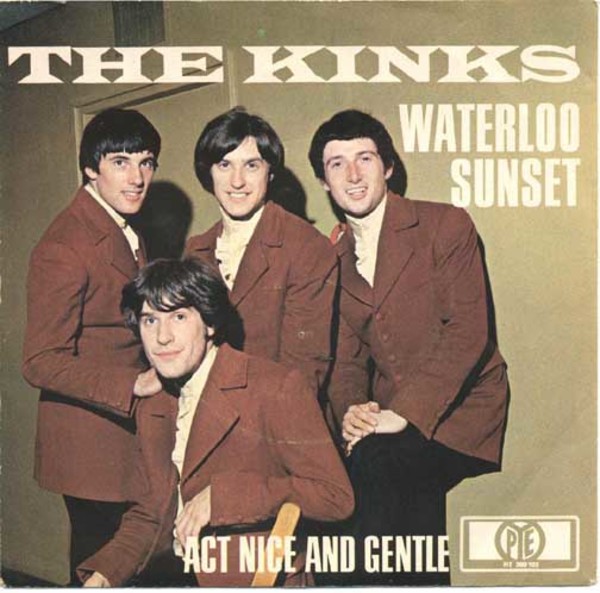
Written by Kinks lead singer Ray Davies, he called this “a romantic, lyrical song about my older sister’s generation.”
Waterloo Bridge is in London, and the lyrics are about a guy looking out of a window at two lovers meeting at Waterloo Station. Davies used to cross Waterloo Bridge every day when he was a student at Croydon Art School.
It is often claimed that the line, “Terry meets Julie, Waterloo Station every Friday night” is about the relationship between actor Terence Stamp and actress Julie Christie. However, Ray Davies denied this in his autobiography. He subsequently revealed that it was “a fantasy about my sister going off with her boyfriend to a new world and they were going to emigrate and go to another country.”
According to Kinks biographer Nick Hasted, Terry was Ray’s nephew Terry Davies, whom he was close to in early teenage years.
Further confusing the matter, Davies told Rolling Stone in 2015 that Julie and Terry were “big, famous actors at the time.” The actors had been dating since the early ’60s and starred together in the film Far From the Madding Crowd, which is often cited as the direct inspiration for the song, but the film didn’t come out until six months after the single’s release.
Waterloo Sunset
Dirty old river, must you keep rolling Flowing into the night? People so busy, make me feel dizzy Taxi light shines so bright
But I don’t need no friends As long as I gaze on Waterloo sunset I am in paradise
Every day I look at the world from my window But chilly, chilly is the evening time Waterloo sunset’s fine (Waterloo sunset’s fine)
Terry meets Julie Waterloo station Every Friday night But I am so lazy, don’t want to wander I stay at home at night
But I don’t feel afraid As long as I gaze on Waterloo sunset I am in paradise
Every day I look at the world from my window But chilly, chilly is the evening time Waterloo sunset’s fine (Waterloo sunset’s fine)
Millions of people swarming like flies ’round Waterloo underground But Terry and Julie cross over the river Where they feel safe and sound And they don’t need no friends As long as they gaze on Waterloo Sunset They are in paradise
Waterloo sunset’s fine (Waterloo sunset’s fine) Waterloo sunset’s fine