Maybe the most famous tear in pop culture is Iron Eyes Cody, an actor in Native American clothing who shows us the tragedy of littering. He debuted Earth Day, April 22, 1971, at the close of a public service advertisement for the anti-litter organization Keep America Beautiful.
The ad contributed to increased environmental consciousness in the U.S., particularly during the 1970s. The commercials helped spur the passage of anti-littering laws and programs such as The Clean Water Act (1972), The Resource Conservation and Recovery Act (1976), and the creation of recycling initiatives in cities nationwide.
At the time of the commercial’s debut, the counterculture was starting to embrace Native American Culture. Iron Eyes Cody could be seen in printed ads, television, and billboards. He was known by the press as the “Crying Indian.”
Born on April 3, 1904, as Espera Oscar de Corti, Cody’s parents were both Sicilian immigrants (Antonio de Corti and his wife, Francesca Salpietra). He grew up in Gueydan, Vermilion Parish, Louisiana, where his parents ran a grocery store.
He portrayed Indians in television shows and movies dating back to 1926. His last appearance was in the 1970s spoof movie The Spirit of 76 released in 1990. He played the role on-screen as well as off…He would deny he wasn’t Native American as late as 1996 and until he passed away in 1999 at the age of 94.
Real or not he did have an effect on me…To a young kid, this hit home. I remember this commercial rather well and there is another anti-littering commercial that I remember. Only people in Tennessee would probably remember it was called “Tennessee Trash.” I have it below the Iron Eye’s Cody video.
The ad remains one of the most memorable and emotionally impactful of all commercials to be made.
The below commercial in 1976 was so popular that they remade it twenty-two years later. I have to say the song will stay in your head. It was filmed on an unopened stretch of I-24 at the time. The theme was sung by country singer-songwriter Ed Bruce and features Irving Kane as the ultimate litterbug.
If you have the slightest bit of interest in documentaries or in silent movies, this is the series to watch. Not only is it a great wealth of info on the silent era…it’s one of the best documentaries I’ve ever watched. It is made up of 13 different one-hour sections. It’s quite a series at 676 minutes.
There is one misconception about silent films that most have. When you think of a silent film what do you think of? Some people think of the hard-to-see Keystone cops running about like they snorted Peru… that is NOT what most silent films looked like. They played at normal speed and the cinematography was breathtaking in many of them. They are as clear as any movie you will watch if the print has been taken care of or restored.
There was a problem with some prints after the silent era. The holes in the film were at a different gauge for the then-modern film projectors and they played them fast and transferred them fast…that meant everything was sped up.
This documentary is to the Silent Era what Ken Burns Civil War doc is to the Civil War. It starts with the pioneers of the movies to the very end when sound took over and changed and some people say ruined an art form. When movies were silent…they were international…no need for translations…just different text. The sound changed all of that and silent movies were at their height.
You get to know the great directors, actors, actresses, cameramen, stuntmen, and movie moguls.
They interviewed these ladies and gentlemen in the late seventies and it was many of their last appearances on film before they passed away. I’m thankful that Kevin Brownlow got this finished and we now have first-hand knowledge of films’ most exciting eras.
I do wish sound pictures would have been held off a few years. The studios weren’t ready for talking pictures. The first “talky” pictures were clumsy and still. The mics had to be placed in flower vases and other stationary places. The silent artists perfected the art of pantomime. Most had great quality (especially in the 20s) that looked better than movies 40 years later. One problem was with the early transfers from the films…now with Criterion and others cleaning up the transfers…we can watch these beautiful movies the way they were intended.
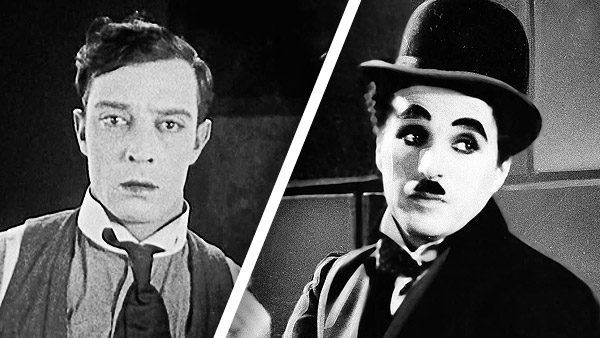
Just like today, you had your formula movies and your great movies. In my opinion, I think the best genre of silent movies is comedies. Not Keystone Cops…they are more like cartoons than films. For me, it would be Charlie Chaplin and Buster Keaton. They both had some of the most subtle and genius gags. Many of their gags have been copied to this day. There were others like Harry Langdon and Harold Lloyd that were popular.
I know it’s a big task BUT…if you like documentaries or silent movies…this series is worth it! Every episode is out there on youtube.
This is the 12th episode and it is about two people…John Gilbert and Clara Bow. Clara Bow is my favorite actress of all time…and yes that includes today.
The cast listing is below the video.
Actors
Mary Astor
Eleanor Boardman
Louise Brooks
Olive Carey
Iron Eyes Cody
Jackie Coogan
Dolores Costello
Viola Dana
Douglas Fairbanks Jr.
Janet Gaynor
Leatrice Joy
Lillian Gish
Bessie Love
Ben Lyon
Marion Mack
Tim McCoy
Colleen Moore
Charles ‘Buddy’ Rogers
Gloria Swanson
Blanche Sweet
John Wayne
Eva von Berne
Lois Wilson
Directors
Dorothy Arzner
Clarence Brown
Karl Brown
Frank Capra
George Cukor
Allan Dwan
Byron Haskin
Henry Hathaway
Henry King
Lewis Milestone
Hal Roach
Albert S. Rogell
King Vidor
William Wyler.
Choreographer: Agnes de Mille,
Writer: Anita Loos,
Writer: Adela Rogers St. Johns,
Press Agent/writer: Cedric Belfrage,
Organist: Gaylord Carter,
Cinematographers: George J. Folsey, Lee Garmes and Paul Ivano,
Writer: Jesse L. Lasky, Jr.,
Special Effects Artist A. Arnold Gillespie, Lord Mountbatten
Agent Paul Kohner
Producer/writer Samuel Marx
Editors William Hornbeck and Grant Whytock
Property Pan: Lefty Hough
Stuntmen Bob Rose, Yakima Canutt: Paul Malvern, and Harvey Parry, Rudolph Valentino’s brother Alberto Valentino





 PowerPop... An Eclectic Collection of Pop Culture