

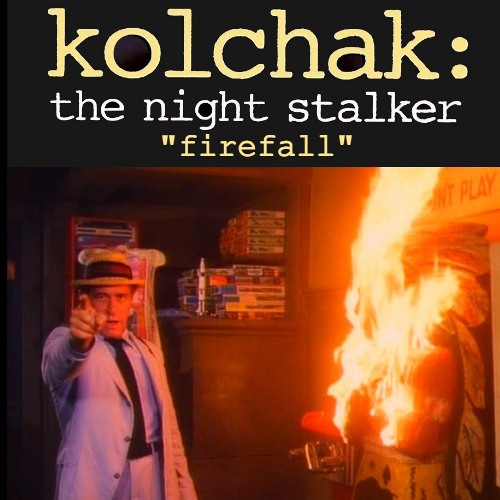
November 08, 1974 Season 1 Episode 6
If you want to see where we are…HERE is a list of the episodes.
This episode brought to mind the Twilight Zone episode, Mirror Image. A much more deadly version, though. The noir type of narration helps in this one because of the unusual story. Kolchak gets more involved in this one than most… he is in the center of it.
This one has a very different storyline from the others so far. By the time Kolchak: The Night Stalker aired this episode, the series had already established itself as a mix of noir and dark humor. This episode presents one of the show’s more psychologically complex stories. Instead of a vampire, werewolf, or zombie, this one focuses on a ghost-like “doppelganger,” a mysterious double that stalks its victim until it kills him. The result is a haunting-filled hour that shows just how flexible the Kolchak format could be.
The story begins when Kolchak investigates a series of spontaneous combustions connected to a famous symphony conductor, Ryder Bond. People around Bond are dying in fiery, unexplained accidents, and Kolchak quickly suspects something supernatural. But this isn’t your standard ghost story. What sets this one apart is its odd concept: a ghostly twin, born out of a near-death experience, who appears whenever the conductor falls asleep, a sleeping phantom trying to take his place in the world.
Director Don Weis uses shadows, flickering lights, and slow zooms to heighten the tension. Also, he makes the Chicago nights look especially moody here. Darren McGavin’s performance is typically sharp; his Kolchak is funny yet genuinely frightened. He balances humor with desperation as he realizes he’s chasing something that can’t be photographed or fought. The episode also benefits from a solid supporting cast, including Fred Beir as Bond and Madlyn Rhue as his wife.
It stands out more than the Alien episode because it dives heavily into psychological horror rather than pure monster-of-the-week thrills. It’s about the fear of losing yourself and being replaced by something that looks like you but isn’t. For a 1970s network TV show, that’s surprisingly territory. While it doesn’t have the flashy monster effects of “The Werewolf” or “The Zombie,” it lingers in your mind long after it’s over.
The COMPLETE EPISODE
 PowerPop... An Eclectic Collection of Pop Culture