Canned Heat – Going Up Country

I wasn’t there but this song equals Woodstock to me. Every time I hear this song I think of a field full of hippies with bubbles. Alan “Blind Owl” Wilson wrote this song based on an old blues song called Bull Doze Blues. It peaked at #11 in the Billboard 100 and #5 in Canada in 1969.

Alan Wilson moved to Los Angeles and met Bob “The Bear” Hite and in 1965 started Canned Heat. The group took their name from “Canned Heat Blues,” an obscure 1928 track by bluesman Tommy Johnson that described the drug high achieved through drinking the household product Sterno.

In 1967, after appearing at the Monterey Pop Festival, Canned Heat signed with Liberty Records. They made a self-titled album that year and it peaked at #76 on the Billboard Charts. In 1968 they released “Boogie with Canned Heat” which made it to number 16. They followed that album with “Living the Blues”(#18) and in 1969 released the album Hallelujah(#37).

Their appearance at Woodstock raised their stock higher. They had two hit singles both sung by Alan Wilson, this song released in 1968, and  On The Road Again released in 1969. Alan wasn’t the regular lead singer of Canned Heat but he did sing the two best-known singles by them. They were both written by him and based on old blues songs. His unusual voice came from him trying to mimic the voice of old blues singers. Bob Hite was the lead singer of the band.

Alan Wilson is a forgotten figure who was a gifted musician. He died in 1970 under strange circumstances outdoors in a sleeping bag near his band’s lead singer’s (Bob Hite) house. He was dead at the age of 27. Jimi Hendrix would die in a couple of weeks and Janis Joplin would follow a month later…all of them were age 27.

Going Up Country was heavily influenced by an old and obscure Blues song called “Bull Doze Blues” by Henry Thomas. The song caught on in the summer of 1969 and was very popular among Hippies who appreciated the nature theme.

Going Up Country

I’m goin’ up the country, baby don’t you want to go?
I’m goin’ to some place, I’ve never been before
I’m goin’ I’m goin’ where the water tastes like wine
I’m goin’ where the water tastes like wine
We can jump in the water, stay drunk all the time
I’m gonna leave this city, got to get away
All this fussin’ and fightin’ man, you know I sure can’t stay
So baby pack your leavin’ trunk
You know we’ve got to leave today
Just exactly where we’re goin’ I cannot say
But we might even leave the U.S.A.
It’s a brand new game, that I want to play

No use in your runnin’, or screamin’ and cryin’
‘Cause you got a home as long as I’ve got mine

Bob Dylan – Let’s Stick Together

This post is a 4-in-1 deal…Let’s Stick Together was on Bob Dylan’s album Down In The Groove…considered his worst album by some critics. I never thought that…I bought it when it came out and it’s not that bad. The worse Bob Dylan album is much better than a lot of others.

This song has been covered by a lot of artists. The confusing part is the song not only goes by Let’s Stick Together but also Let’s Work Together.

Our band covered this one and we did it with the arrangement that Dylan laid down. I like this song no matter who covers it. I like Bryan Ferry, Canned Heat, and Wilbert Harrison’s version.

Wilbert Harrison originally wrote and recorded this blues-style R&B number as “Let’s Stick Together,” a plea for fidelity in a fractured marriage. That version, released in 1962, didn’t make the charts (until Bryan Ferry covered it in 1976) but never left Harrison’s mind. Seven years later, he resurrected the song, keeping the melody but changing the lyrics. “I thought I’d put some words to it that meant a bit more.”

Changing the title to “Let’s Work Together,” Harrison’s new message of unity was aimed at a nation rife with conflict over the Civil Rights Movement and the Vietnam War.

Canned Heat didn’t want to overshadow Harrison with their version. In fact, if they’d known the singer was going to have success with it, they never would have recorded it in the first place. They first heard the tune when it was still making the rounds at underground radio stations. Their new guitarist Harvey Mandel played it for the rest of the guys and suggested they cover it, but their co-vocalist, Bob “The Bear” Hite, wanted to wait a few months to see if Harrison would chart first. According to drummer Adolfo de la Parra, Hite didn’t like taking songs away from living black musicians unless they weren’t hits.

Bryan Ferry had success with the song…peaking at #4 in the UK in 1976 and #1 in Australia. In 1988 Ferry did an updated version of the song, re-mixed by Bruce Lampcov & Rhett Davies. This re-recording reached #12 in the UK chart. Ferry had the most success with the song.

https://www.youtube.com/watch?v=Hom0fYd5uX4

Let’s Stick Together

Well, a marriage vow, you know, it’s very sacred
The man put us together, now, you wanna make it
Stick together
Come on, come on, stick together

You know, you made a vow, not to leave one another, never
Well, ya never miss your water ’til your well runs dry
Now, come on, baby, give our love a try, let’s stick together
Come on, come on, stick together

We made a vow, not to leave one another, never
Well, ya never miss your water ’til your well runs dry
Come one, baby, give our love a try, let’s stick together
Come on, come on and stick together
You know, we made a vow, not to leave one another, never

It might be tough for a while, but consider the child
Cannot be happy without his mom and his papi

Let’s stick together
Come on, come on, stick together
You know, we made a vow, not to leave one another, never

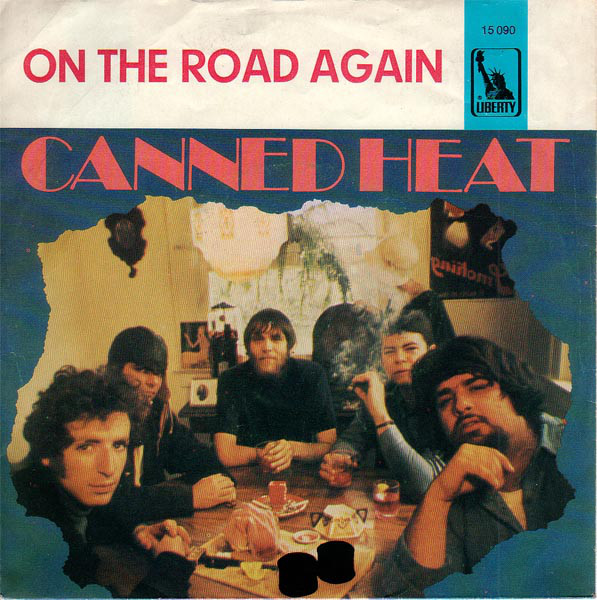
Canned Heat – On The Road Again

Such an underrated band.  What made this band real to me was their live album with John Lee Hooker called Hooker ‘n Heat…it is incredible. They also represent part of the Woodstock era well. When I think of Woodstock…this song and Going Up Country come to mind.

Their appearance there raised their stock higher. They had two hit singles Going Up Country and  On The Road Again. They were both written by Alan “Blind Owl” Wilson and based on old blues songs. His unusual voice came from him trying to mimic the voice of old blues singers. Wilson was not the lead singer of Canned Heat but did sing on some songs.

Wilson’s nickname, “Blind Owl,” was bestowed upon him by friend John Fahey during a road trip in 1965 from Boston to Los Angeles and was a reference to the extra-thick lenses Wilson wore.

He had an encyclopedic knowledge of the blues. Wilson and Bob Hite founded the band in 1965. Lead singer Bob “The Bear” Hite was extroverted and a terrific 300lb showman. Wilson was just the opposite. He was very intelligent, awkward, suffered from depression, and was not a prototypical rock star. He was a great guitar and harp player.

Alan Wilson and Bob Hite, 1970. : r/blues

Alan “Blind Owl” Wilson and Bob “The Bear” Hite

The song peaked at #16 in the Billboard 100, #8 in the UK and #8 in Canada in 1968. This song was on Canned Heat’s album “Boogie with Canned Heat.”Alan Wilson played a tamboura on this song to get the droning effect. Wilson’s falsetto was in the style of Skip James. The song was written by Alan Wilson and Floyd Jones.

Alan Wilson died on September 3, 1970. No one knows if it was a suicide or an accidental overdose of Seconal… Later in 1981 Bob “The Bear” Hite would also die of an overdose in 1981.

The band is still touring. They have drummer Adolfo de la Parra who has been with them since the sixties as the only long term member.

On The Road Again

Well, I’m so tired of crying
But I’m out on the road again
I’m on the road again
Well, I’m so tired of crying
But I’m out on the road again
I’m on the road again
I ain’t got no woman
Just to call my special friend

You know the first time I traveled
Out in the rain and snow
In the rain and snow
You know the first time I traveled
Out in the rain and snow
In the rain and snow
I didn’t have no payroll
Not even no place to go

And my dear mother left me
When I was quite young
And my dear mother left me
When I was quite young
She said “Lord, have mercy
On my wicked son”

Take a hint from me, mama
Please don’t you cry no more
Don’t you cry no more
Take a hint from me, mama
Please don’t you cry no more
Don’t you cry no more
‘Cause it’s soon one morning
Down the road I’m going

But I ain’t going down
That long old lonesome road
All by myself
But I ain’t going down
That long old lonesome road
All by myself
I can’t carry you, baby
Gonna carry somebody else

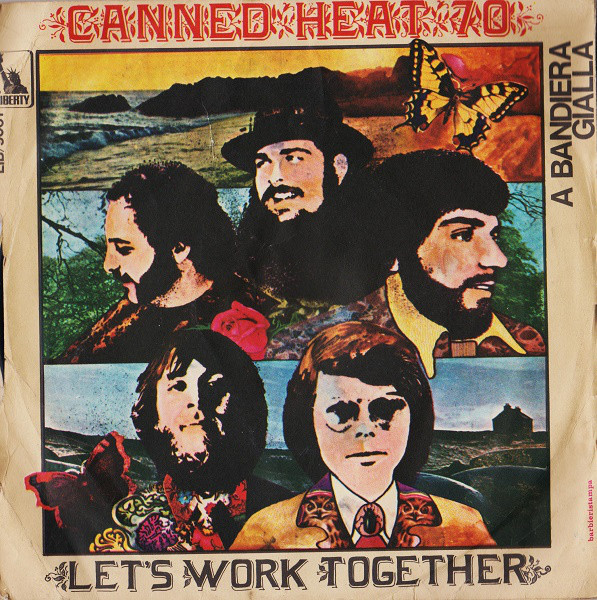
Canned Heat – Let’s Work Together

“Let’s Stick Together” was originally recorded by Wilbert Harrison in 1962. Eight years later, the American singer had a hit with a modified version, “Let’s Work Together,” which was covered by Canned Heat.

The song peaked at #26 in the Billboard 100 in 1970.

Canned Heat was a good blues band and their appearance at Woodstock raised their fortunes. They would end up with 3 top 40 songs and 2 more in the top 100. Going Up Country and On The Road Again were the band’s best-known hits. They were doing well but it came to an end when guitarist/vocalist Alan “Blind Owl” Wilson died on September 3, 1970. No one knows if it was a suicide or an accidental overdose of Seconal.

Canned Heat continues to this day but they were never as successful after Alan passed away. Bob Hite is singing this song.

https://www.youtube.com/watch?v=tnPkEyP_Tzg

Let’s Work Together

Together we’ll stand
Divided we’ll fall
Come on now, people
Let’s get on the ball

And work together
Come on, come on
Let’s work together
Now, now people
Because together we will stand
Every boy, every girl and man

People, when things go wrong
As they sometimes will
And the road you travel
It stays all uphill

Let’s work together
Come on, come on
Let’s work together, ah
You know together we will stand
Every boy, girl, woman and man

Oh well now, two or three minutes
Two or three hours
What does it matter now
In this life of ours

Let’s work together
Come on, come on
Let’s work together
Now, now people
Because together we will stand
Every boy, every woman and man

Ah, come on
Ah, come on, let’s work together

Well now, make someone happy
Make someone smile
Let’s all work together
And make life worthwhile

Let’s work together
Come on, come on
Let’s work together
Now, now people
Because together we will stand
Every boy, girl, woman and man

Oh well now, come on you people
Walk hand in hand
Let’s make this world of ours
A good place to stand

And work together
Come on, come on
Let’s work together
Now, now people
Because together we will stand
Every boy, girl, woman and man
Ah, yeah

Well now, together we will stand
Every boy, girl, woman and man
Ah, yeah

Together we’ll stand
Divided we’ll fall
Come on now, people
Let’s get on the ball

And work together
Come on, come on
Let’s work together
Now, now people
Because together we will stand
Every boy, every girl and man

People, when things go wrong
As they sometimes will
And the road you travel
It stays all uphill

Let’s work together
Come on, come on
Let’s work together, ah
You know together we will stand
Every boy, girl, woman and man

Oh well now, two or three minutes
Two or three hours
What does it matter now
In this life of ours

Let’s work together
Come on, come on
Let’s work together
Now, now people
Because together we will stand
Every boy, every woman and man

Ah, come on
Ah, come on, let’s work together

Well now, make someone happy
Make someone smile
Let’s all work together
And make life worthwhile

Let’s work together
Come on, come on
Let’s work together
Now, now people
Because together we will stand
Every boy, girl, woman and man

Oh well now, come on you people
Walk hand in hand
Let’s make this world of ours
A good place to stand

And work together
Come on, come on
Let’s work together
Now, now people
Because together we will stand
Every boy, girl, woman and man
Ah, yeah

Well now, together we will stand
Every boy, girl, woman and man
Ah, yeah


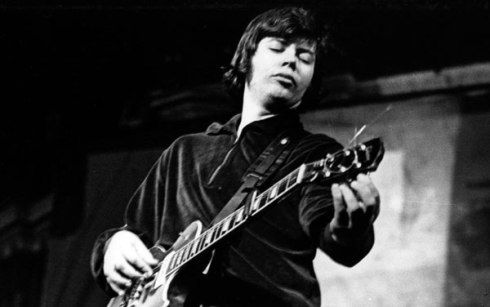
Alan “Blind Owl” Wilson

Alan Wilson is a forgotten figure who was a gifted musician. He died in 1970 under strange circumstances outdoors in a sleeping bag near his band’s lead singer’s (Bob Hite) house. He was dead at the age of 27. Jimi Hendrix would die in a couple of weeks and Janis Joplin would follow a month later…all of them were age 27.

Alan grew up in Boston, Massachusetts where he became a music major at Boston University. He was a frequent player at the Cambridge coffeehouse folk-blues circuit. Alan ended up a blues scholar. He had a massive collection of old blues records and was a walking encyclopedia of the blues. Wilson’s nickname, “Blind Owl,” was bestowed upon him by friend John Fahey during a road trip in 1965 from Boston to Los Angeles and was a reference to the extra-thick lenses Wilson wore.

Alan moved to Los Angeles and met Bob “The Bear” Hite and in 1965 started Canned Heat. The group decided to take their name from “Canned Heat Blues,” an obscure 1928 track by bluesman Tommy Johnson that described the drug high achieved through drinking the household product Sterno.

In 1967, after appearing at the Monterey Pop Festival, Canned Heat signed to Liberty Records. They made a self-titled album that year and it peaked at #76 on the Billboard Charts. In 1968 they released “Boogie with Canned Heat” which made it to number 16. They followed that album with “Living the Blues”(#18) and in 1969 released album Hallelujah(#37).

Their appearance at Woodstock raised their stock higher. They had two hit singles both sung by Alan Wilson, Going Up Country (1968 ) and  On The Road Again (1969). Alan wasn’t the lead singer of Canned Heat but he sang the two best-known singles by them. They were both written by him and based off old blues songs. His unusual voice came from him trying to mimic the voice of old blues singers.

He was very intelligent, awkward, suffered from depression and was not a prototypical rock star. Alan was a serious environmentalist trying to save the Redwood trees. He would sleep outside often to be alone with nature. Alan Wilson was a superb slide guitar and harmonica player. John Lee Hooker said that Wilson was “the greatest harmonica player who ever lived.”

He was a big fan of Eddie James House, Jr. who was was better known as “Son House,” the great blues artist who had retired. He not only retired but was an alcoholic and had not played guitar in years and could not remember his old songs and slide parts from the 20s and 30s. Son House is said to have tutored Robert Johnson. John Hammond asked Alan Wilson to teach the 63-year-old Son House how to play like Son House again. Wilson knew his old records and licks and taught them to Son House who relearned them. House was later signed to a contract.

It gave Son House a career again and he kept playing till he retired again in 1974 after being rediscovered by a new generation. You can hear them both together on the Son House album John the Revelator: The 1970 London Sessions.

Alan died on September 3, 1970. No one knows if it was a suicide or an accidental overdose of Seconal.

Canned Heat continues to this day but they were never as successful after Alan passed away.

For a complete look at Alan Wilson go here to http://www.blindowl.net/index.html
it’s a great site. Below is an essay he wrote in 1970 about the Redwoods.

“Grim Harvest”

“The redwoods of California are the tallest living things on earth, nearly the oldest, and among the most beautiful to boot. They dominated the woods of the northern hemi-sphere in the time of the dinosaurs, a time when no mammal, flower, or blade of grass had yet appeared on earth. The Ice Age nearly exterminated them – of the once vast redwood forest only a remnant was spared by the immense glaciers which covered most of Europe, Asia, and North America in the not-too-distant evolutionary past.

Walking through this forest is an experience unique on earth. Here the sun’s rays are intercepted three hundred feet and more above the ground and are broken into tiny shimmering beams which descend among the towering pillars to play, at length, on the forest floor. Fern and wildflower bathe in the soft glow of a thousand muted spotlights which flicker on and off as the trees’ upper boughs sway majestically in a gentle wind.

2.000.000 acres of virgin redwood forest greeted the white man’s civilization as he completed his sweep of North America. In the last 100 years 1,800,000 acres of these have been logged, and of the remaining 200,000 only 75,000 are presently safe from devastation in state and national parks. At a time when these parks campsites must be reserved months in advance, the remaining 125,000 acres are being “harvested” (as the lumber-men put it), for uses which other trees could fulfill.

At the current rate of “harvest,” these remaining acres will be cleared within the next ten years.”

– Alan C. Wilson, 1970

Related imageRelated imageRelated imageRelated image