

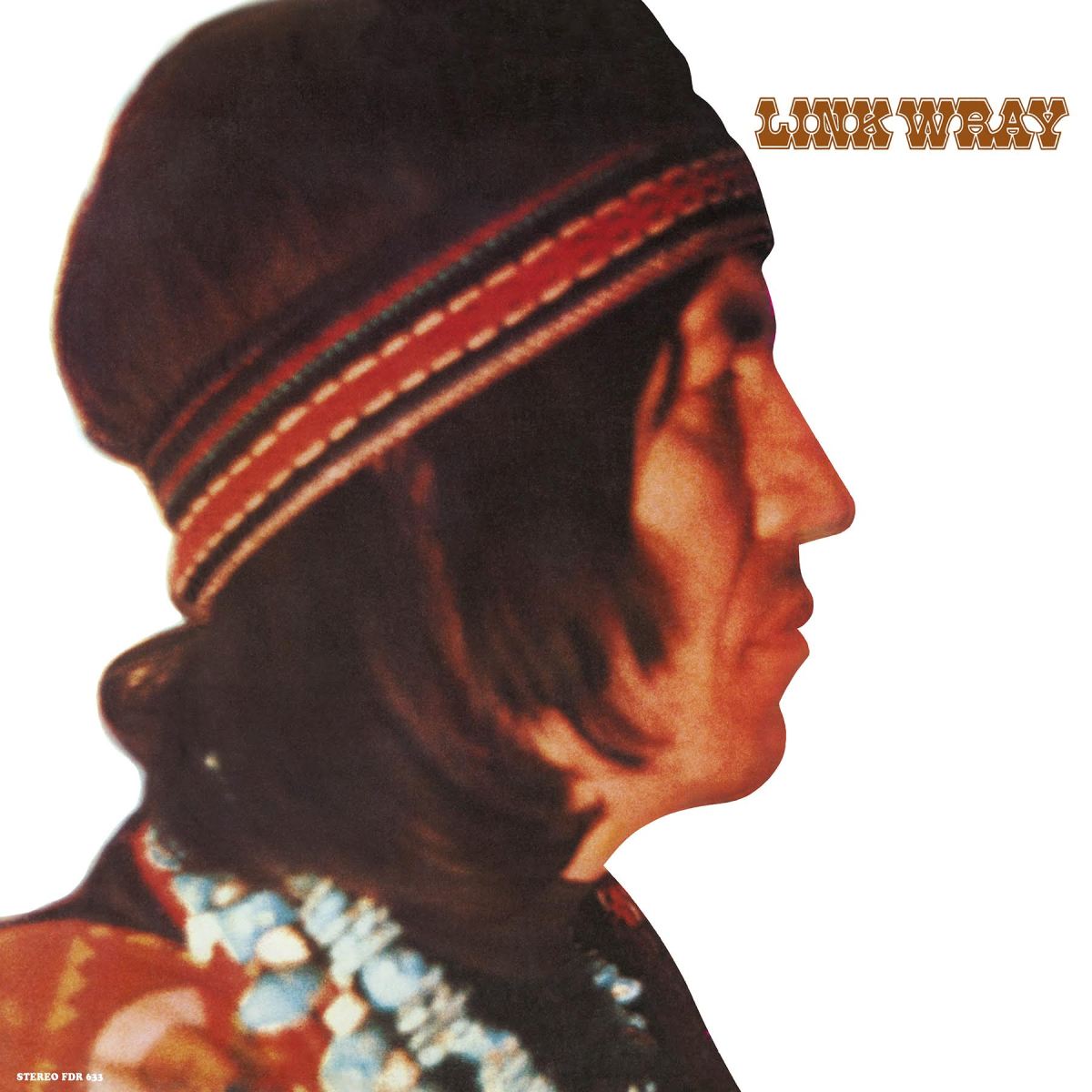
I was really taken aback when I saw this album. I played it, expecting an instrumental, and when I heard a voice, I thought it was a different singer. When I think of Link Wray, I think of Rumble and instrumentals like that. I was surprised when I found this roots album by him, recorded in 1971. I want to thank Lisa for posting something that made me think of this rare Link Wray album.
After serving in the military, Wray contracted tuberculosis and lost a lung, which made singing difficult, and doctors advised him against it. Because of his breathing difficulties, Wray began to focus more on expressive and experimental guitar playing, leading him to become known for his instrumental hits. Wray was a Native American of Shawnee descent. He grew up in North Carolina. Wray later honored his heritage in his music, with songs like Apache and Comanche.
This album was recorded in a converted chicken shack. His brother, Ray Vermon Wray, helped produce it along with Bob Feldman and Steve Verroca. Instead of power chords and a leather jacket, Link traded distortion for Americana, funk, gospel, and storytelling. It was earthy, roots-driven, and deeply personal, almost a different artist altogether from the one I thought I knew. After being freed from label pressures, Link finally made the music he grew up with: gospel from church revivals, Native American rhythms from family heritage, country blues, and Southern soul.
There were still guitars, but now they sat behind the songs instead of smashing through them. Tracks like Fire and Brimstone, Juke Box Mama, and Ice People feel like they were born out of the dirt. The grooves are loose, almost like field recordings. His voice, rarely heard on record before this, carries a soulful and weathered sound. He didn’t sound like a rock guitarist trying to sing; he sounded like a weathered preacher who happened to play guitar.
You hear old-time country on Take Me Home Jesus, boogie on God Out West, and Native rhythms driving Black River Swamp. No other rock guitarist of his generation made anything remotely like this. Only one song retains his old tone, and that’s the intro to Tail Dragger. If anything, it pointed the way decades later for artists like Los Lobos and the entire alt-country movement. If you want to hear some authentic Americana, listen to this album.
Polydor gave the album a shot, but the public wanted Link the guitar guy, not Link the backwoods Americana prophet. Sales were modest, and critics were divided. However, like many records that were too authentic for their time, it grew in legend over time. Today, many fans call the 1971 album his true masterpiece
Black River Swamp
I was born down in the countryDown where the cotton growsTurnin’ off the main highwayGoin’ down that country road
There’s a place down in the countryWhere the pine trees grow so tallWalk across that old log bridgeStretching ‘cross Black River Swamp
I can hear them bullfrogs croakingIn the blackness of the nightCalling me back to my childhoodDown here in Black River Swamp
Saw my name carved on a big oak treeDown there by the fishing holeAnd the smell of old Black RiverWhere the waters are deep and cold
I can hear the hound dogs howlin’Chasin’ that old fox where I used to roamDown there in the countryCallin’ me to Black River Swamp
I can hear them hound dogs howlin’Chasin’ that old fox where I used to roamDown there in the countryCallin’ me to Black River Swamp
I was born in the countryDown where the cotton growsTurnin’ off the main highwayGoin’ down that country road
There’s a place down in the countryWhere the pine trees grow so tallGo across that log bridgeStretching ‘cross Black River Swamp
 PowerPop... An Eclectic Collection of Pop Culture