If you want to see where we are…HERE is a list of the episodes.
This episode can become confusing quickly if you don’t pay attention. The editing in parts of this is fast. This one shows off the Village really well with its pastel colors. Number 6 is tested more in this episode than in the other ones so far. You can tell in parts that they are getting to him mentally.
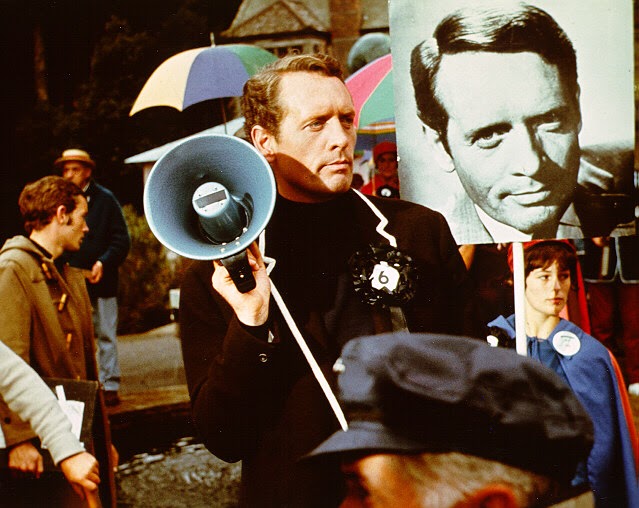
Number Six is suddenly treated less like a prisoner and more like a public figure when the Village announces an election for Number Two. He is encouraged to stand as a candidate himself. It sounds like a chance to speak out and maybe even expose the whole setup. He might be able to turn the Village’s own system against itself.
As the campaign gets going, it becomes clear that this election is not really about freedom, choice, or public debate. Number Six is coached and packaged for the crowd. The Village turns politics into another form of control. Rallies, speeches, and promises are all part of the performance. The people around him act like voters, but the whole thing has the feeling of a trap, with every move watched.
He tries to speak honestly, telling people not to trust the system, but the message gets twisted into the campaign. The more he resists, the more popular he becomes. It’s all about power and control. Number 6 can’t separate what’s real from what’s being done to him. By the end, the election was a way to break him down and test him. The campaign itself seems like just another prison. Be Seeing You!
If you want to see where we are…HERE is a list of the episodes.
This episode turns the Village into a lab. Number Six is drugged and pulled into a three-part dream program, each scenario designed to crack him open and find out why he resigned. The title is literal, three separate “tests,” and the method is modern for the late 60s, not fists threats, but psychology, repetition, and control of the setting. I love dream sequences in shows, so I’m really happy with this one.
The first sequence drops him into a rough version of his old life, with familiar faces and a push toward panic. The second shifts the tone, calmer on the surface and built to steer him into the same trap from a different angle. The third is the tightest and most direct. Number 2 is trying to guide him to a single answer through suggestion and pressure. He keeps fighting for any piece of truth he can find. Each segment feels like a different door leading to the same room.
What makes this one stick is how it shows the Village evolving. They are less interested in punishment and more interested in results. Number Two isn’t just managing the place; he’s running experiments and taking notes. He is trying to solve a human being. Number Six, even half-awake and off-balance, still won’t give them the one thing they want. The episode ends without any comfort at all. They can trap you, study you, and even rewrite your reality for an hour. But they still can’t own what you choose to keep. Another one where Number 6 turns the tables on Number 2. Be Seeing You!
If you want to see where we are…HERE is a list of the episodes.
Both sides are becoming identical. An International community, a perfect blueprint for world order….Number 2
The show has such a good premise. What does a super spy do when he/she retires? Most likely, they won’t be able to live their life in peace, but where do they go?
This was the 5th episode filmed, but it’s the second one aired. This explains the reason a few months have passed in time since he arrived. It’s one of my favorite episodes. The sugar cubes scene is very telling. They have it in his file how many cubes he uses in his tea. Just to mess with them, he changes the number he usually takes. Number 2 looks on in disbelief because Number 6 will not join quietly like some others did.
This episode really pushes the series into spy territory, playing with the idea that escape might be possible. Number Six encounters another prisoner who claims that she has outside contacts and a plan, and for the first time, the Village seems less sealed than it did in Arrival. She insists she knows a way to escape from the Village, and Number 6 builds a raft. After carefully planning their attempt, the two manage to leave the Village and drift out to sea. You think, hmmm, maybe he will break out of there…and he does, but then comes a twist.
The episode borrows the spy checklist… coded messages, double agents, and quiet deals, which suggests a more familiar path forward. You also see in what lengths the village will go to tame Number 6, and it’s out there. It also makes clear that intelligence work itself can be a trap. Trust becomes a liability, and the system Number Six once served is resembling the one now holding him.
It really drives home that escape is not just physical; it is psychological. It reinforces the idea that resistance is expected, managed, and often used against those who attempt it. It’s a great episode with who I think made the best Number 2, Leo McKern. He is one of the few who will return at the end. Be Seeing You!
If you want to see where we are…HERE is a list of the episodes.
I have covered The Twilight Zone, Star Trek, and Kolchak: The Night Stalker episode by episode, and I think The Prisoner will fit in perfectly. This will be my first British show episode by episode, although I’ve made posts on Fawlty Towers and Are You Being Served. I hope you will enjoy these.
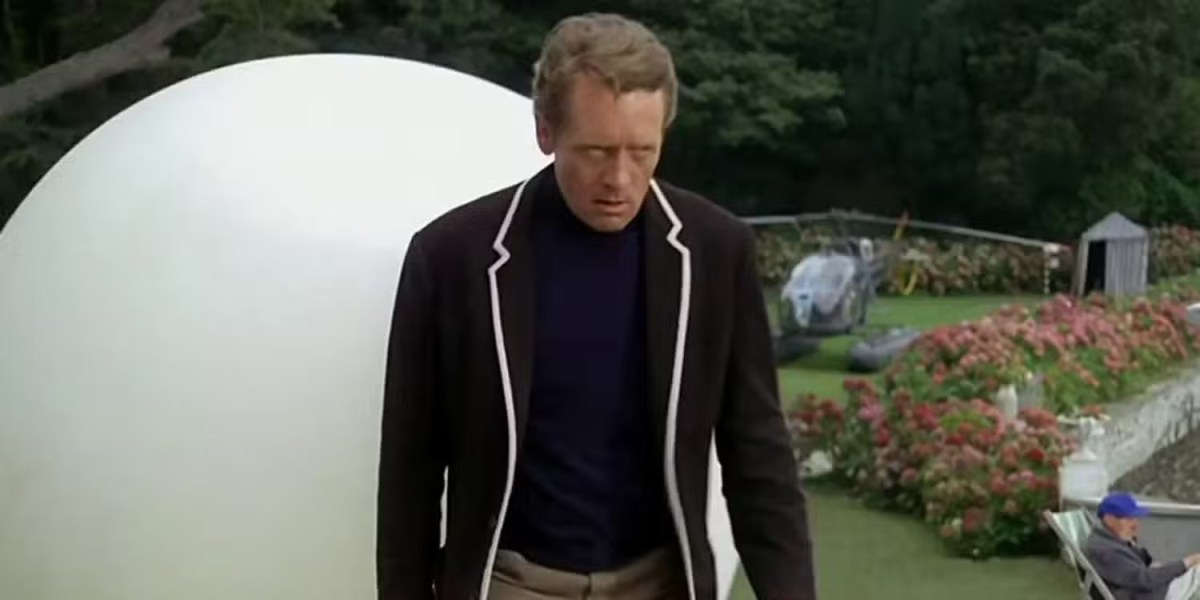
What an opening! You resign from your workplace, and you are abducted by someone or some group and wake up in a pastel-looking village where individuality is a no-go. You are assigned a number, and that is now your name. There are so many symbolic images, and our Number 6 refuses to give in. Also, who would think a white weather balloon-looking device (Rover) could be so menacing?
This episode opens The Prisoner by throwing the viewer, like its hero, straight into disorientation. A government agent abruptly resigns, is abducted, and wakes up in the Village. It’s a bright seaside resort that feels pleasant until it doesn’t. Patrick McGoohan establishes the conflict immediately: individuality versus control and bureaucracy. The episode uses visuals and silence as much as dialogue, which pulls you in. As soon as he awakes from an unfamiliar pillow, the show is on.
The Village itself becomes the real star. Smiling residents, surveillance, and cheery announcements clash with the unspoken threat behind them. Authority is masked as friendliness, and rules are vague but absolute and must be followed. Trying to escape is treated as both foolish and dangerous. The balloon-like Rover makes its first appearance here, not explained, just accepted as the force it is. You will see it in action, and we are not sure why it attacked a Villager, and we are not told why. It reinforces the show’s refusal to reassure the audience that everything will be all right. Names are not used here; only numbers are used. Our spy is now Number 6. The Village is totally internal; no outside is mentioned or displayed. Any map is just of the Village, nothing of the world.
He meets a person who is the so-called leader…today. That would be Number 2. A different Number 2 every episode, with a few exceptions. They want to know why number 6 resigned. That is when our guy Number says I will not make any deals. I’ve resigned. I will not be pushed, filed, stamped, indexed, briefed, debriefed, or numbered. My life is my own. Number 6 comes off as rude and impatient, but it makes sense. He is there against his will and doesn’t know who to trust. Throughout the series, he does find a few he does trust at the moment, at least partway.
By the end, this introductory episode has done its job. It defines the tone and the mystery. It also doesn’t resolve anything. Questions about identity, obedience, and yes, freedom are raised but not answered. That unease is the point and a big reason I kept on watching. As a first episode, it is bold and strange. You think everything will be explained, but it won’t. Beware of Rover!
In this episode, Number 6 is finding out the lay of the land, and the Village is getting to know him. He is looking to get out and give it a couple of shots. He does meet someone he knows, a spy, and he meets a lady with a chance to escape.
And so the trip to the bizarre begins, Be Seeing You!
“I will not make any deals. I’ve resigned. I will not be pushed, filed, stamped, indexed, briefed, debriefed, or numbered. My life is my own.”… Number 6
“I must have individuality in everything I do. I question everything. I don’t accept anything on face value. I argue because by arguing, something good often comes from the results.”… Patrick McGoohan
This introductory post is quite long, but I’ll keep the episodes within a 1-2 minute read, I promise, because I have most of them written. There is SO much to say about this show. I started this post in January and have been adding to it ever since. Next Friday we start the episodes with Episode 1…Arrival.
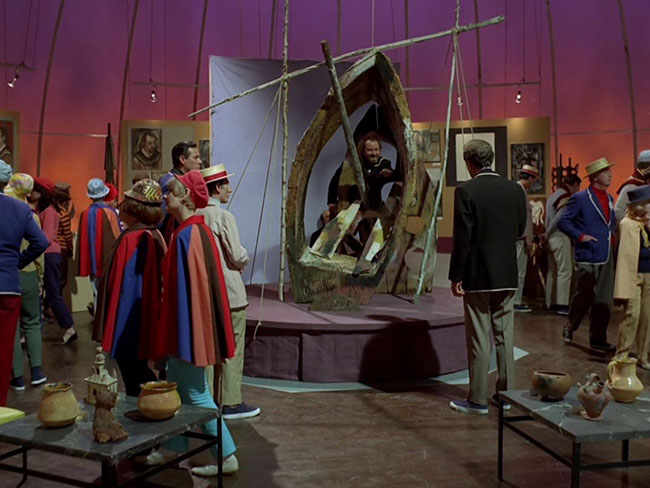
Original, experimental, very surreal, still totally relevant today, ahead of its time, who is number 1? Where or what is The Village? Struggles with individualism, conformity, authority, and the nature of freedom, set within a mysterious, idyllic village. Surrealism? Yes, this one has it in spades! Salvador Dali could have directed some of the episodes. Also…the color of these shows! They beat modern movie colors with a stick. The brightness and distinct color just pop off the screen, a selling point for color TV back then, creating a surreal, pop-art feel. McGoohan even banned the word “television” on the set. He wanted everyone to have a cinematic view.
The word “allegory” comes up frequently in descriptions of this series. People are still trying to figure out what it means, and we all have our interpretations. Patrick McGoohan was a very successful actor, but he was questioned the rest of his life about this 17-episode series. It was a British show in 1967-1968. In Canada and the US, college classes have been taught about this show to try to get the meaning out of it.
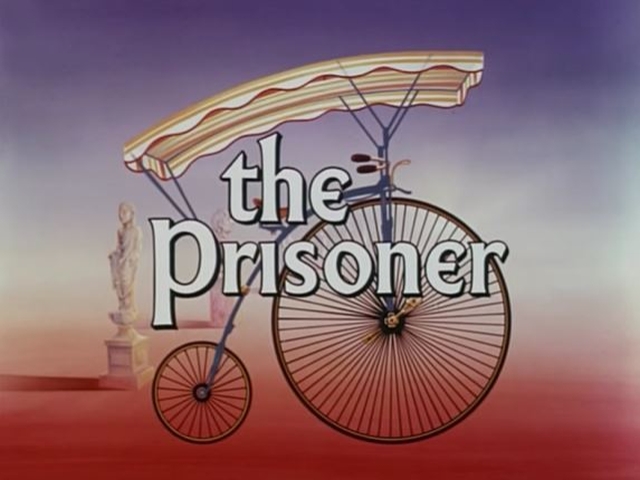
I’m going to post this series episode by episode. It’s only 17 episodes this time, so it won’t take long. I wanted another sci-fi show, and this one fits that bill without a hundred episodes. This is one of the most interesting television shows I’ve ever seen, bar none. It’s like James Bond meets The Twilight Zone…heavy on the Twilight Zone. They only had 17 episodes, but it was enough to go on a trip into the bizarre. I watched this a decade ago, and I just watched it again in the past two weeks. Number 6 is my hero in his fight against a forced society.
A British spy resigns, and he goes home. At home, you see sleeping gas coming through the keyhole, and after that, he wakes up in a new home. He wakes up in a place called “The Village” with no name, a small microcosm of a perfect community where people are issued numbers instead of using names. Escape is made nearly impossible, enforced by a gang of thugs and a bizarre white sphere (called Rover) that smotheres people to death or brings them back to the village after an escape attempt. Cordless phones, constant surveillance, manipulative organisations, people reduced to numbers, and so on. Rover seemed laughable at the time with the effects, but now drones perform exactly that function, so it was a question of the technology not being available when the show was made.
A map (title is Your Village) says “The Mountains,” “The Sea,” and other generic names. Individualism is gone in this place. It’s quite a nightmare. He does not have his name when he is there; he is called Number 6. You never know his real name. The main question the Village leaders want to know is the reason WHY he resigned. He has a lot of secrets in his head, important to both sides. He just will not disclose the reason for his resignation. One reason is that he doesn’t know which side got him. The other reason is that he just didn’t want to because his life is his own.
He doesn’t resist using weapons or gadgets, but with wit and stubbornness. Each episode tests him in a different way: psychological games, manufactured communities, false friendships, and shifting authority figures. The Village looks pleasant, almost cheerful, which makes its constant surveillance more unsettling. The question is never just who is in charge, but why submission is expected at all. They mess with his mind constantly to the point where they bring a double in and convince him he is someone else. But, I’m happy to say, he messes with them as well, like in the episode Hammer Into Anvil. He usually turns the tables on them. He is the only independent thinker in the village, or the only one who admits it.
What separates The Prisoner from standard spy television shows (or other shows, for that matter) is its willingness to abandon logic for an idea. That’s the best way I know of putting it. Some episodes are like satire, others like dreams that do not explain themselves. The rotating cast of Number Twos keeps power unstable, reinforcing the sense that the system matters more than any individual running it. It’s a show that requires your attention, and they counted on that to keep the audience engaged. Number 6 is not a nice guy in this. He doesn’t want to be there, and some of the good citizens were in the know, and some were like Number 6. You cannot trust anyone, and he refuses to conform.
This show was the brainchild of “Danger Man” actor Patrick McGoohan. In The Prisoner, he was also director/co-producer/creator, and his allegorical tale concerned the retirement/imprisonment of a spy who knew too much.
Historians have long argued whether he was retiring his character John Drake from Danger Man, and if this was John Drake character, it’s never said. Patrick denied it, but others say it was probably the character he played before, but wouldn’t mention him because of royalties that would have to be paid tothe creator of Danger Man. It doesn’t really matter if this is John Drake or not; we know him now by Number 6.
If you want to see where we are…HERE is a list of the episodes.
First of all, thank you all for following this series. This is the final episode, unfortunately. It’s been a fun trip down this lane! It was a lot of fun watching these again after at least a decade for me. Sometimes older shows, even 5 years old, don’t hold up as well. These really do, and even the weaker episodes have something to offer. Not many times can I say I watched a complete series without one clunker. I can see why this series is a cult favorite.
What were you doing on March 28, 1975? I was 8 and probably in bed when this came on, but now I’m catching up. In this one, we have Kathie Browne (Star Trek, Wink of an Eye episode, Gunsmoke, etc, 93 acting credits) as Lieutenant Irene Lamont. She was also Darren McGavin’s real-life wife. Their chemistry is evident, and it strengthens this episode. She knows how to handle Kolchak, about as well as you can anyway. If the show had gone on to another season, it would have been smart to bring her in to play Lieutenant Irene Lamont for good. Unlike the other reporters, Kolchak is not charmed by a pretty face like the other reporters were.
Tom Bosley (Mr. C on Happy Days) also guest stars as Jack Flaherty, who works at an underground data-storage facility where the trouble begins. The data storage was there in case of nuclear war. Companies can have all their records stored safely, and for personal items.
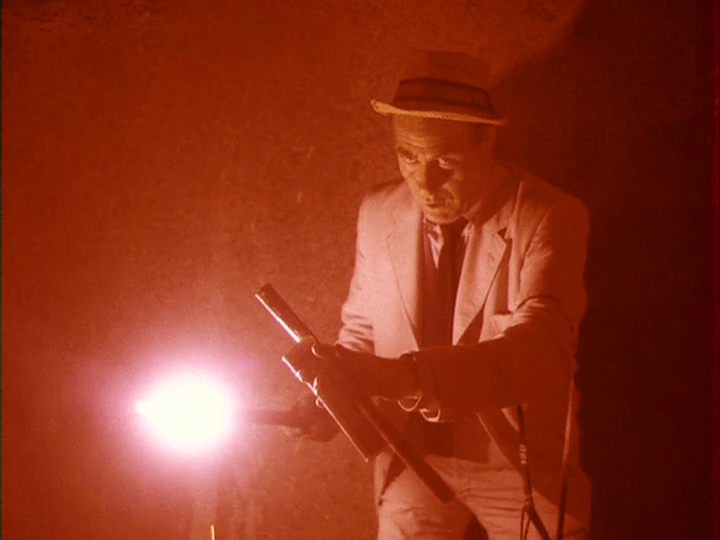
This episode started at the end with a flashback, with Kolchak racing down a long corridor in a golf cart. He is being chased by something, and then the story begins as he talks into his recorder. Before this, a wave of violent attacks in the data storage center tunnels happened in Chicago. Victims are found torn apart, and police believe a large animal may be responsible. Carl Kolchak notices the injuries don’t match any known animal in the area and begins tracing the incidents to locations connected by buried passageways beneath the city.
Kolchak impersonates a doctor to be there for an autopsy and an insurance man to get information out of a data storage worker. Just a typical day for him. Conning his way into the underground facility, Kolchak sees a large, reptilian creature, and when he tries to tell the police, he discovers what appears to be a government and military cover-up. He also realizes that the exciting geologic find, which appears to be rock are actually a nest of eggs.
In the final moments, Kolchak follows the creature into the tunnels and comes face-to-face with it again. He finishes his report, aware it will likely never be published, yet again.
Anyone familiar with Star Trek will recognize this plot as a close remake of the classic episode, “The Devil In The Dark” in which a creature with the ability to travel through solid rock kills miners who have mistakenly destroyed its eggs.
So long, Carl, we thank you for being such a truly iconic character.
Closing Narration
I know what’s gonna happen now. As far as the authorities are concerned, the events of April twentieth and twenty-first will never have occurred. They-They’re gonna tell me that if I ever breathe a word of this, they’re gonna break me like a straw man. Now what about the sentry? Will its eggs hatch in the warm, dark dank dampness of its nesting place? Who knows? Maybe the government will find the nest, maybe they won’t. We’ll probably never know. But if you’re in the subway or in a pedestrian tunnel underneath a ballpark and you think you hear something moving in the walls, it may not be your imagination. Take my advice, don’t walk, run to the nearest exit.
If you want to see where we are…HERE is a list of the episodes.
We have the very lovely Cathy Lee Crosby in this episode as Helen Surtees. She runs the Max-Match Corporation, a dating service. It also had John Fiedler, whose voice is very thin and right above a whisper. His voice was probably more well-known than he was. John Fiedler voiced Piglet in Disney’s Winnie the Pooh franchise for 37 years, from 1968 to 2005. He was on Star Trek and guested on The Bob Newhart Show many times as one of Bob’s patients. George Savalas, Telly’s brother, played Demosthenes, which, funny enough, was his real middle name. A nice support from a funny Kathleen Freeman as Bella Sarkof, a matchmaker hoping to find Kolchak a wife (she may, in fact, still be waiting for Kolchak’s return call).
This episode opens with a string of murders where older men and women are found with their bodies showing signs of extreme aging in a short time. Police think it is a normal homicide case with strange medical results, but Kolchak notices that every victim had recently crossed paths with the same young person.
He uncovers records going back decades showing the same face connected to deaths. Doctors confirm the victims lost years of life in hours. Kolchak realizes the killer is not just murdering but absorbing life itself, using it to stay young. The trail leads to Max-Match.
In the final stretch, Kolchak confronts the problem and forces a showdown that reveals the truth and stops the killing. Kolchak files another report that will likely be buried, while the city moves on as if nothing unusual happened. It’s an odd episode. It has some very funny and entertaining scenes in this one, but overall, it’s not one of the top episodes.
If you want to see where we are…HERE is a list of the episodes.
In this one, we have another police captain. John Dehner plays Captain Vernon Rausch in this episode. His name is not Steve McQueen or Marlon Brando, but he had an incredible 305 acting credits to his name. A wonderful character actor that you have probably seen in the 1940s through the 1980s. He was in Gunsmoke, Twilight Zone, Mission Impossible, and so many other television shows. Compared to the other captains, he actually talked to Kolchak without making him go away for the most part…but he is “playing out the string” to his career, so to speak, and he gets reporters like Kolchak to do a lot of the investigating for him. Carl calls him out on this.
Another character actress, Lieux Dressler, played Minerva Musso an interior decorator. She livened the episode up with her couple of appearances.
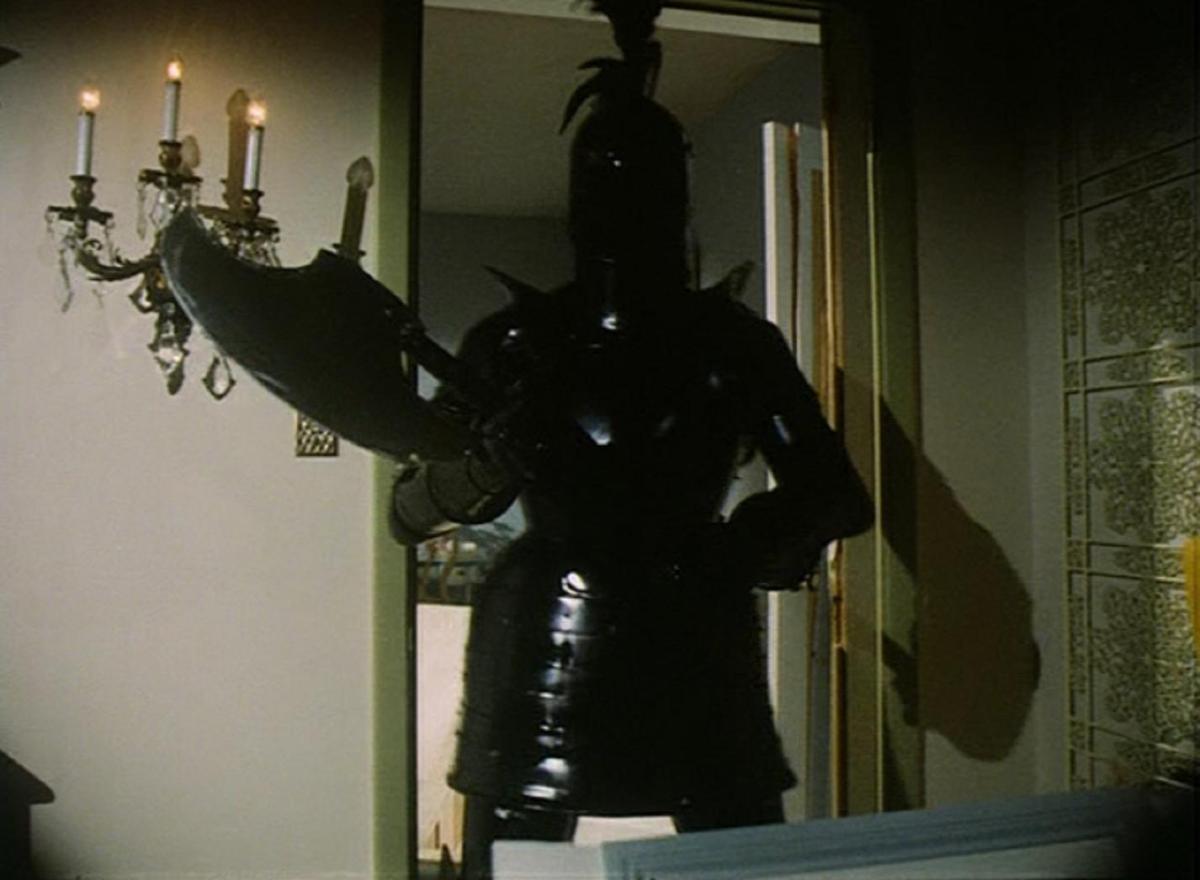
The 18th episode of Kolchak begins with a series of killings in Chicago tied to a museum exhibit of medieval artifacts. Victims are found run through with what appears to be a lance. The police look for a modern suspect using antique weapons, but Kolchak sees a pattern linked to a specific suit of armor on display. Each murder is connected to members of a small historical society, men who share a past dispute that dates back years.
Kolchak digs into the background of the group and learns they were once part of a medieval re-enactment order. One of their former members died under questionable circumstances. The armor in the exhibit had belonged to that man. As more society members are killed, Kolchak concludes that the armor itself is animated, moving on its own to carry out revenge. Witnesses describe a towering knight appearing and vanishing without explanation.
SPOILER Below
In the final act, Kolchak tracks the armor to the museum after hours. He confirms that the spirit of the dead member is driving the killings from within the suit of armor. Using quick thinking rather than force, he disrupts the armor and ends the threat, exposing the truth even as the authorities dismiss the supernatural angle. As usual, Kolchak files his story, and as usual, it is unlikely to see print.
I love this quote by Tony:
Carl Kolchak: What is important is that it takes 420 pounds of pressure – psi. – to crush a telephone. Now, it says right here that a medieval knight in full armor and in full weaponry weighs well over 400 pounds.
Tony Vincenzo: Oh, I feel much better. All my life I wanted to know that a medieval knight could crush a telephone.
If you want to see where we are…HERE is a list of the episodes.
In this one, Carl Kolchak investigates the brutal, unsolved murders of healthy people whose hearts were removed. It seems that an Aztec cult is offering them as sacrifices for their mummified warrior chief. It’s needed every 52 years in a ten-cycle pattern; this being the ninth, and the fifth and final offering must be a willing one. Pepe Torres seems to be that man, though if Carl has any say in the matter, he may make him change his mind…
Though not tightly plotted, this is still an interesting episode that makes use of its millennium theme and 52-year cycles – we’ll have to watch out for the year 2027! This had some gruesome things in it, especially for network television at the time. If this were on today, it would be an HBO series, I’m sure.
In this episode, we have toothy Erik Estrada (playing Pepe Torres) before his fame in CHiPs. Three lovely ladies, Vicky (Sondra Currie), Nina (Merrie Lynn Ross), and Lona (Dorrie Thomson), who is at Pepe Torre’s beck and call, but the story drops the ball by mostly ignoring them, with only Currie getting much screen time. We also have Sorrell Booke, a wonderful character actor made famous by The Dukes of Hazzard and many other shows he was in.
I must say this. One thing I didn’t understand here. Tony Vincenzo is attending a journalist’s convention and has invited Carl Kolchak along. Kolchak hears of a homicide over his police radio and abruptly leaves. I can’t believe that any editor or company, for that matter, would try to prevent a reporter from going to the scene of a crime. But to give it some credit, it’s not a secret that Kolchak doesn’t exactly listen to Tony anyway, so there would be some frustration on Tony’s part.
You know, it would have been cool if Simon Oakland could have been written to help Kolchak a little more. In fact, Oakland said, “I wish he would, then I could get away from the office, but the scripts have been running this way. They want more of me in the office, but we’ve found we’re competing with the other networks for action, so it’s been all Darren’s (McGavin) show. I suppose I could help him, but…”
“Well, I’m supposed to keep the office scenes alive because they can go dead. I’ve got to bring some organic life into them, and I’m really trying to bring a feeling to it…I wish I had a little more to do in the show. I don’t like it, but I don’t mind.”
Fun Note…Simon Oakland and Darren McGavin got along well both on and off set. They were both featured in a Gunsmoke episode called “The Hostage” in 1965.
If you want to see where we are…HERE is a list of the episodes.
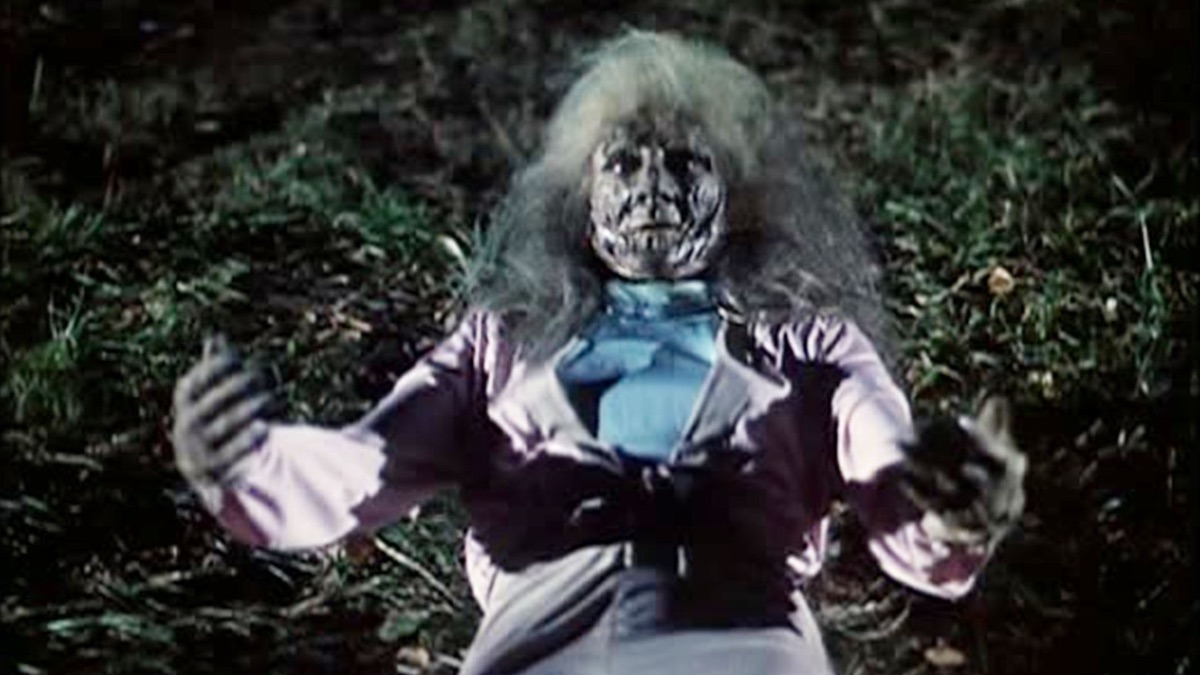
A stone tablet is found in the Middle East and is brought back to America for study. A deadly mystical force is unleashed. In that way, it reminds me of The Exorcist. Kolchak investigates the strange murders of healthy young men who died of apparent heart attacks, all accompanied by the deaths of young women under strange circumstances.
It opens with an Illinois state college athlete out for a spin one night who gives a lift to an attractive young woman. The young athlete is later found dead of a massive shock-induced heart attack, with the body of the girl he’d picked up lying next to him. The only problem is that the girl he picked up had died hours before of a drug overdose.
Another college student dies under the same circumstances. Kolchak starts to realize the killer isn’t just a person with a grudge. The episode plays with the idea of beauty as bait. As Kolchak digs deeper, the answers get stranger, and the people around him either don’t believe him or don’t want to.
Spoilers Next
It turns out to be the result of a succubus, a female demonic spirit, as mentioned in the ancient stone tablet from the Chicago college. He must persuade the disbelieving professor (played well by Andrew Prine) in charge to destroy the tablet to stop the demon. Keenan Wynn makes a return as police captain Joe “Mad Dog” Siska.
While not quite among the best monsters of the series, the Succubus’s method of luring her victims is certainly an interesting angle. By the end, you get the usual mix of danger and frustration; he finds the truth, survives it, and still has to fight to get anyone to listen. The makeup and special effects in this episode are really good.
If you want to see where we are…HERE is a list of the episodes.
The writing in this one is a little weaker than the others to me. It has some gaps and some padding. It’s still entertaining, though, like the rest.
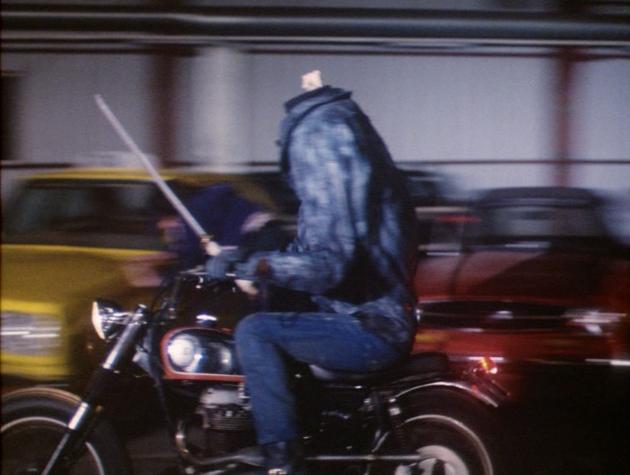
A bad summer in Chicago centers on a string of deaths involving decapitated victims. The murders seem random at first, but Kolchak notices that each killing follows a clear pattern. Witnesses report a motorcycle rider who appears suddenly, strikes, and vanishes. The police treat it as a gang or copycat case, but Kolchak suspects something older at work. We have some stars in this episode. Larry Linville (the notorious Frank Burns on Mash…and some Frank is in him in this episode), Jim Backus (Mr. Howell on Gilligan’s Island), and Jesse White (a great character actor).
Digging into city records and the morgue, Kolchak links the killings to the legend of the Headless Horseman. The motorcycle becomes a modern stand-in for the horse. Kolchak uncovers past incidents that were quietly buried, all involving the same method and the same result. The pattern has resurfaced, and the cycle (no pun intended) has begun again.
Kolchak clashes with the police as he pushes the supernatural theory. The evidence he gathers and witness statements support his theory, but no one wants to accept it. Tony remains cautious, knowing the story will be dismissed if it goes too far. Kolchak has also helped drive Tony to an ulcer, and there is a good scene with them talking about it. Carl really pours it on in this episode. Telling tall tales to get what he wants.
The episode works by placing folklore into a modern setting. The Headless Horseman is not treated as fantasy but as a recurring force that adapts to its surroundings. Kolchak does what he always does: identifies the truth and watches the official story erase it. By the end, the threat is stopped for now, and Chicago returns to normal, unaware of how close it came to something it doesn’t believe exists.
If you want to see where we are…HERE is a list of the episodes.
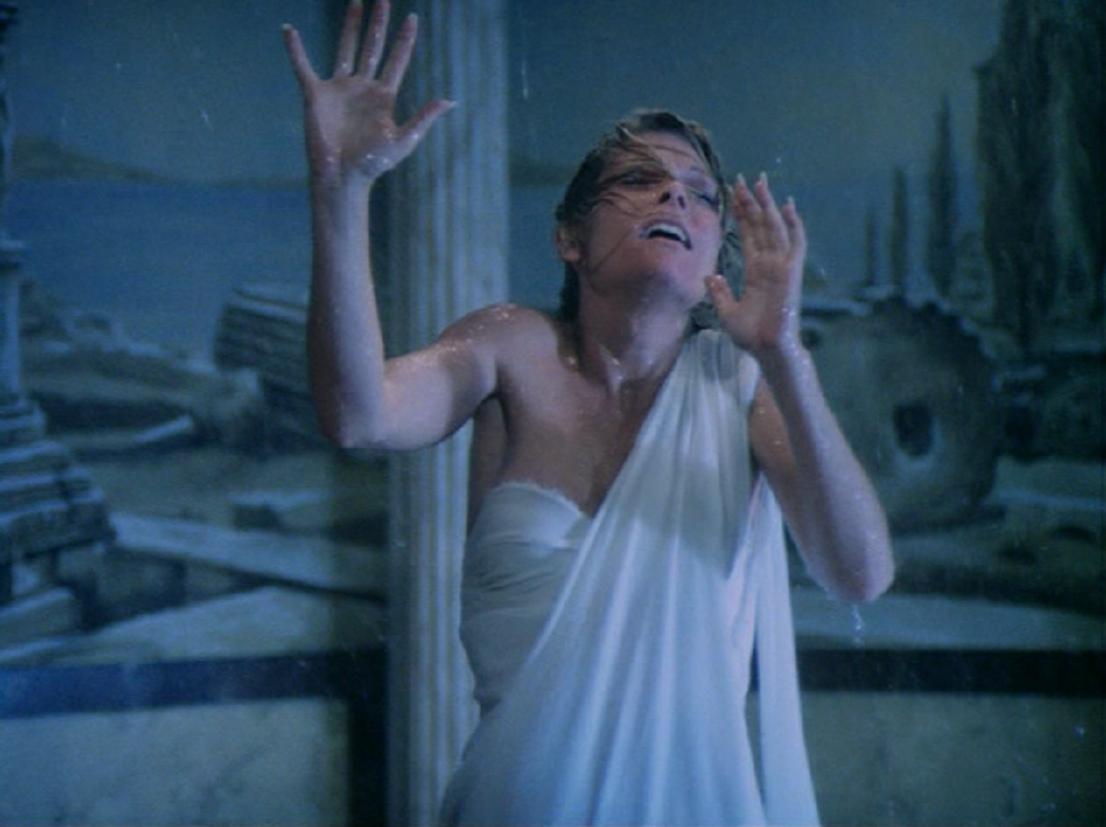
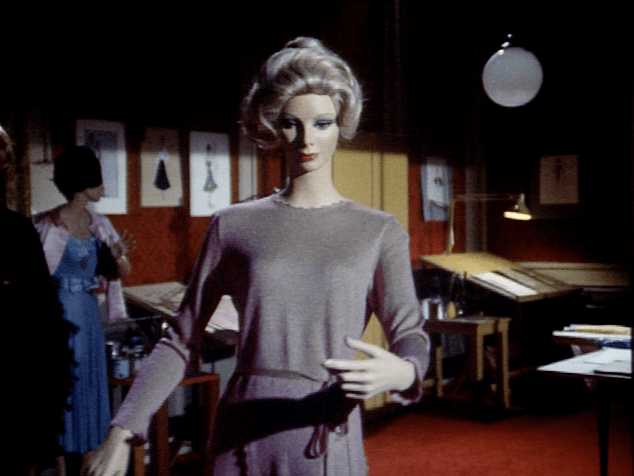
In the first few minutes, we have a lot happening. A man named Mickey Patchek jumps out of a salon window and dies. A model’s face gets attacked by a cat. Another model gets scorched to death in a shower. This episode involves a lot of moving parts. The snooty fashion industry and the mob. The mob thinks Kolchak has some evidence, and they want it within 60 hours. This episode is different. More like a noir detective show for part of it. So far, this doesn’t sound like a Kolchak episode… okay, let’s throw in The Witch. Now we are getting somewhere!
As Kolchak investigates, he uncovers the presence of Madame Trevi, a powerful and wealthy woman who runs a private fashion empire and lives surrounded by luxury and secrecy. Beneath the surface glamour, Kolchak begins to suspect something far older and darker is at work. She treats him with contempt, like most do, but he has to investigate a little more to get to the bottom of it.
Lara Parker, who plays Madeleine, is a good actress, but she does go over the top a little but considering the subject, it does get the point across. Not a girl you would want to take out for dinner or to meet the folks. One scene I really like was when Kolchak visited a witches’ coven in their robes. It shows he will go to the end of the earth to find the truth.
While overall this episode is never exactly scary, it IS somewhat creepy. It’s one of my favorite episodes. There are some well-known television stars in this one. Marvin Miller (voice of Robby the Robot) as the lecturer, Bernie Kopell (Love Boat) as a doctor, Richard Bakalyan (Chinatown) as a mobster, Douglas Fowley as a super, and Henry Brandon in a bit part.
Spoilers!
Very good episode, and it has a satisfying ending. For once, a big article will come out over the fashion world fraud…but of course, nothing about The Witch…but she gets hers…who I’ll never tell.
If you want to see where we are…HERE is a list of the episodes.
It’s good to be watching Kolchak again after the Christmas and New Year’s break. Welcome back, everyone! In this one, we have two recognizable TV stars. Jamie Farr (MASH) and Pat Harrington (One Day At A Time) both appear.
The episode has Kolchak investigating a string of killings tied to a missing anthropology professor, and from there, it spirals into the missing link. The best course of action here is restraint; the monster is rarely seen clearly, and when it is, it’s brief, violent, and deeply unsettling. Director Robert Michael Lewis shoots much of the episode in shadows and tight frames, letting your imagination do most of the work. Frozen cell samples from the Antarctic are accidentally exposed to heat and grow into a missing link that breaks out from the lab and embarks on a rampage.
Kolchak, in this episode, is stubborn to the point of self-destruction, but also shaken by what he’s uncovering. There’s a moment when Kolchak realizes the killer isn’t driven by malice but by something older and uncontrollable. It works because it taps into a universal fear that, beneath our suits and the rules, we are still animals. The supporting cast, especially John Doucette as Sheriff Frank Packer, grounds the episode in realism, making the supernatural elements feel plausible.
No catchy catchphrases, no tidy ending, just a reminder that some monsters don’t come from folklore books, they come from inside us. Tony Vincenzo doesn’t get much to do this time, but there’s some comical interaction between Kolchak and Updyke as the latter threatens to have Kolchak’s car towed if he keeps parking in Updyke’s parking spot…but Kolchak gets him back.
Another good episode. Not the best one, but still up there. Again…with 7 more to go, I haven’t seen a clunker episode yet.
If you want to see where we are…HERE is a list of the episodes.
***Since it’s the Christmas season and most people are watching seasonal programs and are rushing around, Kolchak will return on January 9th, 2026! I do apologize for the interruption, but I thought it was best. We only have 8 more to go.***
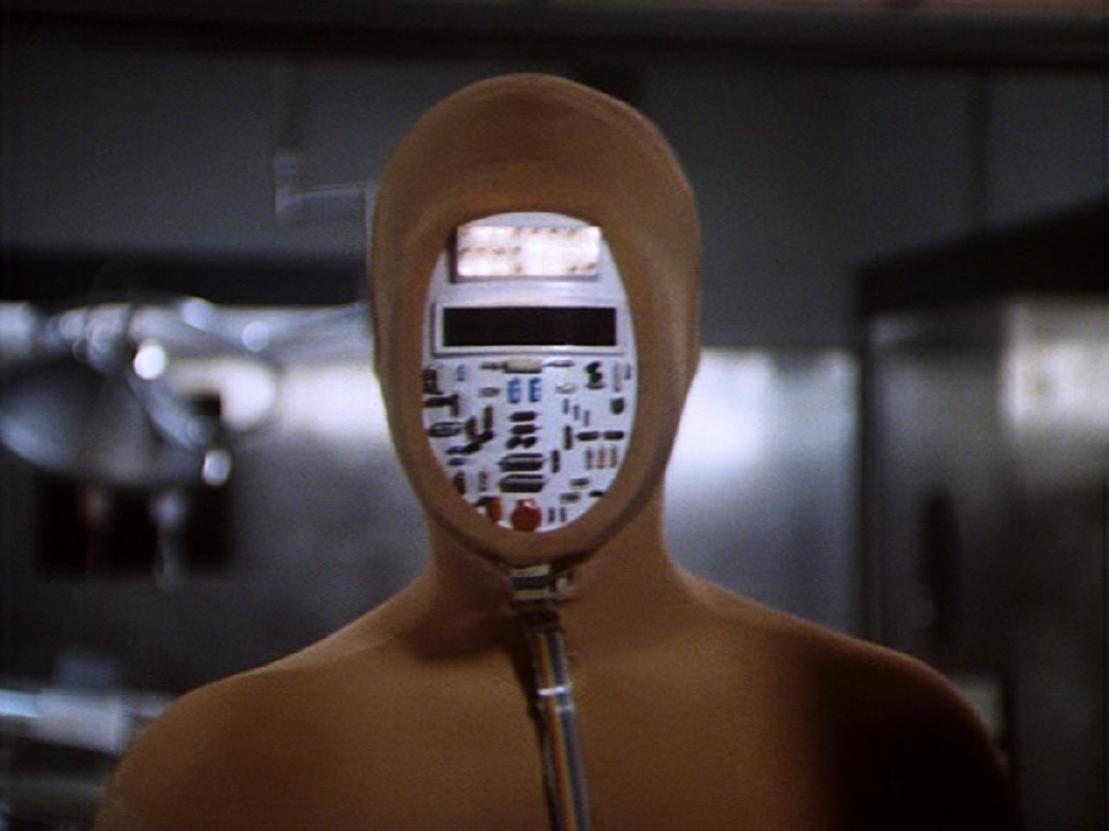
The episode centers on an escaped experimental android named Mr. R.I.N.G. (R.I.N.G. stands for Robomatic Internalized Nerve Ganglia), a government project that went off the rails. Kolchak stumbles onto the story because he missed the day before fishing, so a huge story was given to a co-worker. Kolchak was handed the chore of writing an obituary for a scientist. But of course, he investigated it, and it was a murdered scientist that spiraled into a cover-up with secrecy, classified files, and shredded evidence. The threat here is technology running amok, walking the streets with a purpose no one fully understands. Mr Ring is basically AI before AI. He learns as he goes.
The android itself is unsettling because it isn’t really bad. Unlike the show’s monsters, Mr. R.I.N.G. appears to be struggling to understand its own purpose and emotions. The more Kolchak uncovers, the clearer it becomes that the danger comes from the government forces that created it, not from the robot. This dynamic gives the episode a tragic feel, as though Kolchak is chasing a victim who never asked to be born. Frankenstein comes to mind with this show as well because the “monster” is trying to find itself and is not inherently bad.
It feels close to Westworld, early Terminator, and a touch of The Stepford Wives. Darren McGavin’s performance is especially sharp here, because Kolchak’s sarcasm bounces off humorless officials and tight-lipped agents who refuse to acknowledge anything out of the ordinary. His frustration grows as every lead is buried under regulations. One thing that is different in this episode is that Tony, his boss, is forced to believe in Kolchak this time. The government threatens the newspaper if Tony lets Kolchak continue investigating this.
SPOILERS BELOW
The ending drives home the show’s theme: truth is buried by the system. Mr. R.I.N.G. is erased like a clerical error. Kolchak gets close to exposing everything, only to watch the evidence vanish once again. He is left with nothing except a story no one will print.
Trivia
A little trivia for you, the Tyrell Institute is used as the headquarters in this episode, and a decade later, the name would be used in Blade Runner. Many fans and critics view the Tyrell Institute in Kolchak as a direct precursor or inspiration for the Tyrell Corporation in Blade Runner, sharing themes of artificial life and corporate control over synthetic beings.
If you want to see where we are…HERE is a list of the episodes.
This episode is the most highly rated episode of the series. It is a good episode and will take you down the path where things are not what they seem. The setting is Roosevelt Heights, a Chicago neighborhood largely populated by elderly Jewish residents, and a series of gruesome killings quickly points to something beyond ordinary. Kolchak goes past the police explanations and discovers details about creatures from Indian folklore. It’s a darker, more atmospheric episode, leaning heavily into folklore.
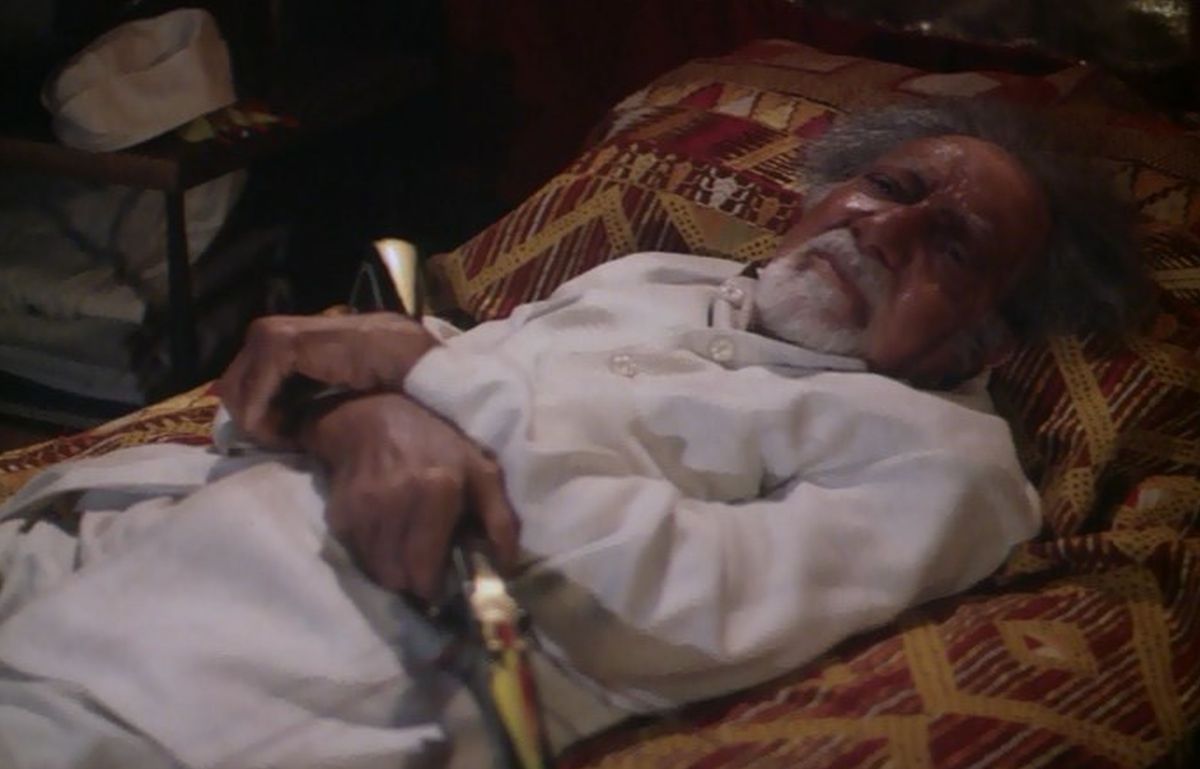
The monster at the heart of the episode is a Raksasha, a shape-shifting demon from Hindu mythology. It doesn’t just kill; it appears to its victims as someone they trust, lowering their guard before striking. That twist gives the story tension, because every familiar face might not be what it seems. The creature’s appearance, when revealed, is not pretty. Kolchak learns the demon has been feeding on residents, and the community tensions spread in the neighborhood it making it easier for the monster. This reminds me of Pennywise from IT, who was also a shapeshifting creature.
As Kolchak digs deeper, he crosses paths with Mr. Furlin and a community group determined to protect their homes from crime, though they don’t realize the real threat isn’t human. When Kolchak finally confronts the Raksasha, the showdown relies on knowledge rather than brute force. I was relieved because I thought he might have made a mistake…But I won’t give that away.
What makes this episode stand out is that it isn’t just about a monster… It’s about a community losing trust in itself. The demon feeds not only on flesh, but on fear and isolation. With its blend of folklore and social tension, it remains one of the most memorable and unsettling episodes in the Kolchak series.




 PowerPop... An Eclectic Collection of Pop Culture