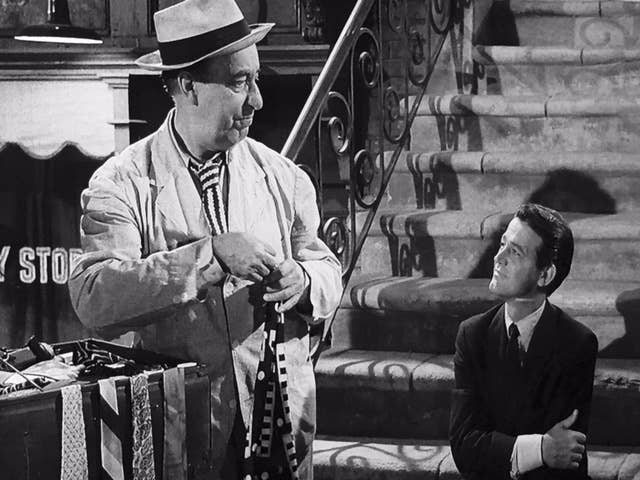
This is a good episode of The Twilight Zone. It’s the first time we meet Death. He comes in different forms in the Twilight Zone. 73 year old Ed Wynn does a superb job as a salesman and a Santa Claus figure in the neighborhood. He is beloved by people but especially kids.
Murray Hamilton also is great as Mr. Death. He is very business like and he treats the job like any other job with deadlines and commitments. I must wonder what people thought in 1959 watching a show with Death stalking someone so businesslike.
Murray Hamilton is probably better remembered for his role playing Mr. Robinson in the 1967 film The Graduate.
Dana Dillaway who played Maggie: The scene where I was hit by the car was kind of morbid… I remember they kept spritzing the actor who was driving the car with a water spray bottle, who came around to see if I was okay while laying in the street… there is a publicity shot of me laying there and it’s kind of morbid!”
This show was written by Rod Serling
Rod Serling’s Opening Narration:
Street scene: Summer. The present. Man on a sidewalk named Lew Bookman, age sixtyish. Occupation: pitchman. Lew Bookman, a fixture of the summer, a rather minor component to a hot July, a nondescript, commonplace little man whose life is a treadmill built out of sidewalks. And in just a moment, Lew Bookman will have to concern himself with survival – because as of three o’clock this hot July afternoon, he’ll be stalked by Mr. Death.
Lou Bookman is a street vendor; a pitchman, making a living selling what he can from his valise – radios, toys, ties and the like. After a long day, he returns to his shabby apartment to find someone waiting for him, someone he saw near where he had been selling that day. That person turns out to be Mr. Death who is there to tell Lou that his time on Earth has come to an end and that his “departure” will be at midnight. Lou tries to forestall his death by asking for a delay until he’s able to make a big sales pitch. It’s all a ruse however and Mr. Death shows him that his actions have consequences. As a result, Lou makes the pitch of his life.
Rod Serling’s Closing Narration:
Lewis J. Bookman, age sixtyish. Occupation: pitchman. Formerly a fixture of the summer, formerly a rather minor component to a hot July. But, throughout his life, a man beloved by the children, and therefore, a most important man. Couldn’t happen, you say? Probably not in most places – but it did happen in the Twilight Zone.
CAST
Rod Serling … Narrator (voice) Ed Wynn … Lou Bookman Murray Hamilton … Mr. Death Dana Dillaway … Maggie Polanski Jay Overholts … Doctor Merritt Bohn … Truck Driver
A good episode to start the series. They would explore this topic of being alone in more episodes to greater affect but a good debut. How new this must have been on the tv landscape at the time. On the DVD set Rod Serling is shown in a short clip trying to sell the series to the network with previews of coming episodes. My guess is the first episode they didn’t want to air a really strange one.
This one has the Twilight Zone twist ending and the moral. Rod Serling wrote this episode. The episode originally featured Westbrook Van Voorhis as narrator. When Voorhis was unavailable for later episodes, Serling re-recorded the narration himself for consistency.
Opening narration:
“The place is here, the time is now, and the journey into the shadows that we’re about to watch could be our journey.”
Summary
A man finds himself walking down a country road, not knowing where nor who he is. He comes across a diner with a jukebox blaring and hot coffee on the stove – only there’s no one there. A little further down the road, he comes to the picturesque town of Oakwood, and finds, it too, seems deserted. The only sounds he hears are a clock tower, and a pay phone ringing. At the local movie theater, an ad for Battle Hymn (1957) leads him to believe he’s in the Air Force. In spite of no people to be found, he can’t shake off the feeling, he’s being watched.
Closing narration:
“Up there, up there in the vastness of space, in the void that is sky, up there is an enemy known as isolation. It sits there in the stars waiting, waiting with the patience of eons, forever waiting…in the Twilight Zone.”
Earl Holliman Earl Holliman … Mike Ferris
James Gregory James Gregory … Air Force General
Paul Langton Paul Langton … Doctor
James McCallion James McCallion … Reporter #1
John Conwell John Conwell … Air Force Colonel
Jay Overholts Jay Overholts … Reporter #2 (as Jay Overholt)
Carter Mullally Jr. Carter Mullally Jr. … Air Force Captain (as Carter Mullaly)
Garry Walberg Garry Walberg … Reporter #3 (as Gary Walberg)
Jim Johnson Jim Johnson … Air Force Staff Sergeant
This song you may remember from the Yardbirds and Aerosmith but this version rocks roots style. No matter what version you know…this song is built for a rock band of any kind.
It was written by Tiny Bradshaw, Howard Kay, and Lois Mann, this song was originally performed by Tiny Bradshaw’s Big Band in 1951.
This version features guitar lines in what many historians consider to be the first recorded example of intentionally distorted guitar in rock music, although blues guitarists, such as Willie Johnson and Pat Hare, had recorded with the same effect years earlier.
The Trio’s guitarist, Paul Burlison, recounted that he noticed the sound after accidentally dropping his amplifier, which dislodged a power tube. Later, “Whenever I wanted to get that sound, I’d just reach back and loosen that tube”
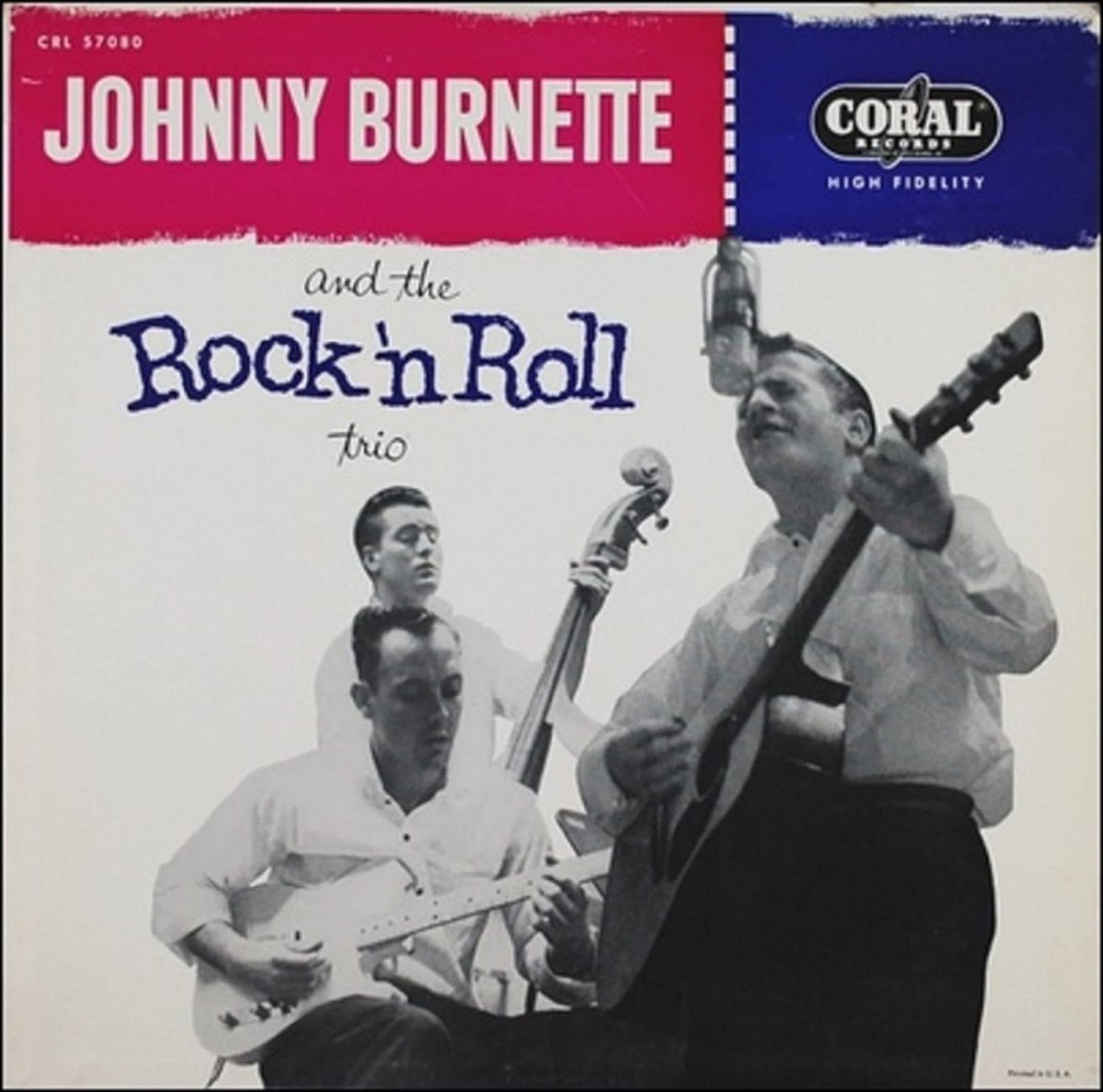
Johnny Burnette recorded this rock version in 1956, and The Yardbirds popularized the song with their rendition in 1965. Aerosmith covered it in 1974, often playing the song as their encore in their early years. Tyler had seen the Yardbirds do it in the sixties and as he said it knocked him out.
Train Kept A Rollin’
I caught a train I met a dame She was a hepster And a real gone dame She was pretty From New York City And we trucked on down that old fair lane With a heave and a ho Well i just couldn’t let her go
Get along, creepy little woman Get along, well be on your way Get along, creepy little woman Get along, well be on your way With a heave and a ho Well i just couldn’t let her go
Well, the train kept a-rollin all night long The train kept a-rollin all night long The train kept me movin’ all night long The train kept a-rollin all night long With a heave and a ho Well i just couldn’t let her go
We made a stop In Alberquerque She must of thought That I was a real gone jerk We got off the train At El Paso Our lovin was so good, jack I couldn’t let her go Get along Well I just couldn’t let her go
Get along, creepy little woman Get along, well be on your way Get along, creepy little woman Get along, well be on your way With a heave and a ho Well I just couldn’t let her go
The train kept a-rollin all night long The train kept a-rollin all night long The train kept her movin’ all night long The train kept a-rollin all night long With a heave and a ho Well I just couldn’t let her go-oh-oh
The first thing I noticed are the huge drums that start this song off. Eddie was one of the great rock and roll guitar players in the 50s. His guitar playing influenced bands such as The Clash, The Ramones, and The Sex Pistols.
Cochran wrote this with the help of Sharon Sheeley, who became Eddie’s girlfriend. There weren’t many female songwriters at the time, but Sheeley’s first effort, “Poor Little Fool,” became a #1 hit for Ricky Nelson.
She met Eddie when she asked him to record one of her songs.
On April 17, 1960, Cochran was killed in a car accident at age 21. Sheeley and Gene Vincent were also in the car and injured in the crash, but Cochran went through the windshield.
Sheeley continued to write songs for artists like Brenda Lee and Irma Thomas. She died in 2002 at age 62.
Somethin’ Else
A look a-there, here she comes There comes that girl again Wanted to date her since I don’t know when But she don’t notice me when I pass She goes with all the guys from outta my class But that can’t stop me from a-thinkin’ to myself She’s sure fine lookin’ man, she’s something else
Hey, look a-there, across the street There’s a car made just for me To own that car would be a luxery But right now I can’t afford the gas A brand new convertible is outta my class But that can’t stop me from athinkin’ to myself That car’s fine lookin’ man, it’s something else
Hey, look a-here, just wait and see Worked hard and saved my dough I’ll buy that car that I been wanting so Get me that girl and we’ll go ridin’ around We’ll look real sharp with the flight top down I keep right on a-dreamin’ and a-thinkin’ to myself When it all comes true man, wow, that’s something else
Look a-there, what’s all this Never thought I’d do this before But here I am a-knockin’ on her door My car’s out front and it’s all mine Just a forty-one ford, not a fifty-nine I got that girl an’ I’m a-thinkin’ to myself She’s sure fine lookin’ man, wow, she’s something else
I’m letting my regular format rest this weekend and contine what I started Friday, a foray into some rockabilly. I hope you stay with me. Let start off this Saturday morning with one of the best…Wanda Jackson.
After posting about Joyce Green a while back I started hunting around for more rockabilly songs. The vocal that Jackson has on this is great. Hard to believe she was a teenager when did this.
Fujiyama Mama is a song written by Jack Hammer. It was first recorded in 1955 by Annisteen Allen. In 1957 rockabilly singer Wanda Jackson recorded it. It did not chart in the United States, but Jackson’s recording peaked at #1 in Japan for several months in 1958.
So why wasn’t this a hit in America? Wanda said “Nobody would play it,” she insists. “They barely had accepted Elvis and the other ones, and they weren’t too sure about accepting a teenage girl singing this kind of music..”
Others have said America wasn’t too happy about the sexual meaning of the lyrics being delivered by a teenage girl. The Japanese enjoyed hearing familiar places in the song much more than the memory of the war. It’s still a cult favorite in Japan.
Wanda Jackson: I’m going to go back now to the year 1958. … Finally, I got a number one song in rock and roll. [Applause.] Thank you, but it wasn’t in America. [Laughs.] It took them a little bit longer to find me. But Japan found me in ’58 and made this song number one for a whole summer. And those people still sing it today—I can’t believe it. Like an evergreen song, you know? Every generation. It’s amazing.
Fuijyama Mama
I’ve been to Nagasaki, Hiroshima too The things I did to them baby, I can do to you
‘Cause I’m a Fujiyama Mama And I’m just about to blow my top Fujiyama-yama, Fujiyama And when I start erupting Ain’t nobody gonna make me stop
I drink a quart of sake, smoke dynamite I chase it with tobbacy and then shoot out the lights
‘Cause I’m a Fujiyama Mama And I’m just about to blow my top Fujiyama-yama, Fujiyama And when I start erupting Ain’t nobody gonna make me stop
Well you can talk about me, say that I’m mean I’ll blow your head off baby with nitroglycerine
‘Cause I’m a Fujiyama Mama And I’m just about to blow my top Fujiyama-yama, Fujiyama And when I start erupting Ain’t nobody gonna make me stop
Well you can say I’m crazy, so deaf and dumb But I can cause destruction just like the atom bomb
‘Cause I’m a Fujiyama Mama And I’m just about to blow my top Fujiyama-yama, Fujiyama And when I start erupting Ain’t nobody gonna make me stop
I drink a quart of sake, smoke dynamite I chase it with tobbacy and then shoot out the lights
‘Cause I’m a Fujiyama Mama And I’m just about to blow my top Fujiyama-yama, Fujiyama And when I start erupting Ain’t nobody gonna make me stop
The lead guitarist on the track was Johnny Meeks, who had replaced Cliff Gallup. The song has a great rockabilly vibe to it…from this came rock but it’s hard to top this.
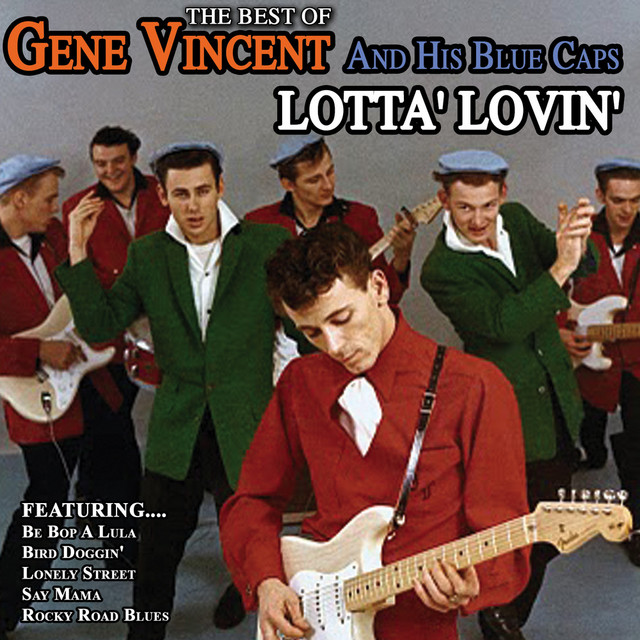
In August 1957, a year after he had scored a million-seller with his debut single, Be-Bop-A-Lula Gene Vincent returned to the U.S. Top 20 with Lotta Lovin’ which, briefly restored his career here that was all too ready to overlook him.
‘Be-Bop-A-Lula’ had propelled Vincent into the limelight while he was still an amateur with only a few hometown appearances to his name. Years later, he blamed his quick baptism of fire for his rapid descent into alcohol.
What didn’t help was the car accident he had on April 16, 1960…with Eddie Cochran in a taxi which killed Cochran. Vincent whose leg was weak due to a wound incurred in combat in Korea…was injured. He walked with a noticeable limp for the rest of his life.
In 1962 he was in Hamburg and played on the same bill as the Beatles. The Beatles got pretty close to him.
Lotta Lovin’
Well I wanna-wanna lotta-lotta lovin’ Well I wanna-wanna lotta-lotta huggin’ So baby can’t you see that you were meant for me I want your lovin’, yes-a-ree.
Well I wanna-wanna lotta-lotta huggin’ Well I wanna-wanna lotta-lotta kissin’ So baby please proceed to get the love I need I want your lovin’ yes indeed.
Well, I want you, I love you, I need you so much Why don’t you give out with that magic touch You send me, you thrill me, baby you’re so fine I want your lovin’ baby all the time.
Well I wanna-wanna lotta-lotta lovin’ Well I wanna-wanna lotta-lotta kissin’ So baby don’t forget I gonna get you yet I want your lovin’, aw you bet. (Rock)
Well, I want you, I love you, I need you so much Why don’t you give out with that magic touch You send me, you thrill me, baby you’re so fine I want your lovin’ baby all the time
Well I wanna-wanna lotta-lotta lovin’ Well I wanna-wanna lotta-lotta huggin’ So baby don’t forget I gonna get you yet I want your lovin’, aw you bet. (Rock)
Well I wanna-wanna lotta lovin’ Well I wanna-wanna lotta huggin’ So baby don’t forget I gonna get you yet I want your lovin’, aw you bet Well,I need your lovin’, aw you bet Well, I want your lovin’, aw you bet Well,I need your lovin’, aw you bet Well, I want your lovin’, aw you bet.
***I have posted my 10 favorite covers of Beatle songs at Keith’s site nostaligicitalian ***
The man was such a great songwriter. His influences stretched from Bob Dylan, Johnny Cash, Rolling Stones and everyone in between…so lets hear it for The Hillbilly Shakespeare
This could be William’s best known song. Williams wrote this shortly after divorcing his wife, Audrey Mae Sheppard. They married in 1944 right after Audrey got a divorce from her husband. The pair would go on to record several duets together (and produce a son, Hank Williams Jr.), but Williams’ drinking ultimately caused trouble in their marriage.
When Hank described his first wife (Audrey) having a cheatin’ heart to country singer Billie Jean Jones, who would soon become his second wife, he was inspired to write the song.
This song was recorded in September of 1952. He would die in January 1, 1953. This would be his last recording session. He also recorded recording Kaw-Liga, I Could Never Be Ashamed of You, and Take These Chains from My Heart.
His last single during his lifetime was I’ll Never Get Out of This World Alive backed with I Could Never Be Ashamed of You which was released in November 1952.
Your Cheatin’ Heart peaked at #1 on the US Country Charts in 1953.
Billie Jean Jones (second wife) on Hank Williams saying the phrase in a car: “Then he said, ‘Hey that’d make a good song! Get out my tablet, baby, you and I are gonna write us a song,'” “Just about as fast as I could write it, Hank quoted the words to me in a matter of minutes.”
From Songfacts
Williams recorded this in September 1952 during what would be his last session at Nashville’s Castle Records. He would die just months later from heart problems (or, some say, suspicious circumstances) on the way to a New Year’s concert in Canton, Ohio. The song was posthumously released in January 1953 and topped the Country & Western Billboard Charts for six weeks.
Many artists have covered this over the years, including Louis Armstrong, Glen Campbell, Fats Domino and Jerry Lee Lewis. Ray Charles’ 1962 version was a hit in both the US and the UK, peaking at #29 and #13, respectively.
Rat Pack member Joey Bishop recorded this in the ’60s on the album Cold, Cold, Heart. Bishop was an actor, and many people considered his version so bad it was actually entertaining. On the album cover, Bishop is dressed in a rhinestone cowboy costume. It contains liner notes by fellow Rat Packer Dean Martin.
For the line “You’ll walk the floor, the way I do,” Williams took inspiration from his friend Ernest Tubb’s “Walkin’ the Floor Over You.” He also recorded three of Tubb’s hits, which were released posthumously: “First Year Blues,” “It Just Don’t Matter Now” and “I’m Free at Last.”
This song shares its name with the 1964 biopic of Hank Williams, starring George Hamilton. Hank Williams Jr. recorded the soundtrack album.
Two versions of this hit the pop charts in 1953: Joni James’ at #2 and Frankie Laine’s at #18.
Your Cheatin’ Heart
Your cheatin’ heart Will make you weep You’ll cry and cry And try to sleep But sleep won’t come The whole night through Your cheatin’ heart Will tell on you
When tears come down Like falling rain You’ll toss around And call my name You’ll walk the floor The way I do Your cheatin’ heart Will tell on you
Your cheatin’ heart Will pine some day And crave the love You threw away The time will come When you’ll be blue Your cheatin’ heart Will tell on you
When tears come down Like falling rain You’ll toss around And call my name You’ll walk the floor The way I do Your cheatin’ heart Will tell on you
I caught you cheatin’ and runnin’ round And now I’m gonna put you in a hole in the ground I’m gonna ride to your funeral Daddy, in a black Cadillac….Joyce Green 1959
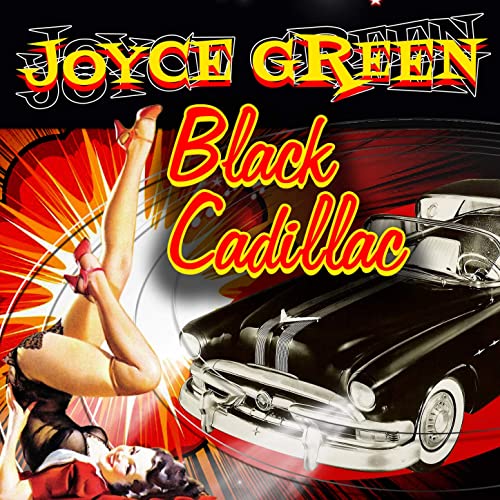
Joyce was only 19 and she didn’t play around in this song. How great are those lyrics? She not only sings this song…she owns it and you don’t want on Joyce’s bad side. Her voice is electric. It’s a downright shame she didn’t do much more. The quality is great.
When I heard this I thought I died and went to rockabilly heaven. A man named Tommy Holder is playing guitar and does he ever. This wasn’t a hit but it’s a treasure to find. Joyce embarked on a promotional tour with Carl Perkins to support the record. The record was never a hit and Joyce did not record again until the 1970s. These later recordings were lost in a fire… and that is sad.
The song was a reworking of an old blues number by Buddy Moss, with Moss’s V8 Ford replaced by a flashy Cadillac.
In 1959, Joyce wrote the song Black Cadillac with her sister Doris. She played the song for Arlen Vaden who arranged a recording session for her at KLCN in Blytheville, Arkansas. Joyce sang and played rhythm guitar on the record which included the song Tomorrow on the A-side and Black Cadillac on the B-side. I can’t believe this was a B side. This was her only release…the single Tomorrow/Black Cadillac.
The other musicians on the record included Tommy Holder on guitar, Teddy Redell on piano, Scotty Kuykendall on bass and Harvey Farley on drums. The record was released on Vaden Records 1959. Vaden Records, based in Trumann (Poinsett County), started as a mail-order company featuring gospel music. It soon grew into a regional studio that released music by such blues and early rock and roll artists as Bobby Brown, Teddy Riedel, Larry Donn, and many others who went on to regional and national fame.
Black Cadillac
I caught you cheatin’ and runnin’ round
And now I’m gonna put you in a hole in the ground
I’m gonna ride to your funeral
Daddy, in a black Cadillac
Oh yeah, you think you won
Oh baby, but you can’t come back
Now, I’m gonna bump you off
Gonna tell you the reason why
You’re worth more to me dead daddy
Than you is alive
I’m gonna ride to your funeral
Daddy, in a black Cadillac
Oh yeah, you think you won
Oh baby, but you can’t come back
I’m gonna buy me a pistol
A great big forty-five
I’m gonna bring you back baby, dead or alive
I’m gonna ride to your funeral
Daddy, in a black Cadillac
Oh yeah, you think you won
Oh baby, but you can’t come back
I’ll hire a black Cadillac
To drive you to your grave
I’m gonna be there baby
Throw that mud in your face
I’m gonna ride to your funeral
Daddy, in a black Cadillac
Oh yeah, you think you won
Oh baby, but you can’t come back
I’ll wear a black mink coat
A diamond ring on my hand
I’m gonna put you under ground
I’ll find myself another man
I’m gonna ride to your funeral
Daddy, in a black Cadillac
Oh yeah, you think you won
Oh baby, but you can’t come back
This song is probably the most important rock and roll song in the history of rock. Parts of it have been borrowed, stolen, and picked apart. Any rock band should be able to play this song or their rock-card gets taken away.
This song that was released in 1958 is based on Berry’s life. It tells the tale of a boy with humble beginnings with a talent for guitar. Some details were changed… Berry was from St. Louis, not Louisiana, and he knew how to read and write very well. He graduated from beauty school with a degree in hairdressing and cosmetology.
Chuck got the name “Johnny” from Johnnie Johnson, a piano player who collaborated with Berry on many songs, including “Maybellene,” “Roll Over Beethoven” and “Sweet Little 16.” Johnson often wrote the songs on piano, and then Berry converted them to guitar and wrote lyrics. Berry joined Johnson’s group, The Sir John Trio, in 1953, and quickly became the lead singer and centerpiece of the band.
Berry got the word “Goode” from the street in St. Louis where he grew up. He lived at 2520 Goode Avenue
Johnnie Johnson as very well-respected among many musicians. He played with Keith Richards, Eric Clapton, John Lee Hooker and many others before his death at age 80 in 2005.
In 1977, NASA sent a copy of this on the Voyager space probe as part of a package that was meant to represent the best in American culture. Someday, aliens could find it and discover Chuck Berry.
The contents of the golden record were selected for NASA by a committee chaired by Carl Sagan. Some disagreed with the inclusion of Johnny B. Goode on the disc, claiming that rock music was adolescent. Carl Sagan responded, “There are a lot of adolescents on the planet.”
The song peaked at #8 in the Billboard 100 in 1958.
From Songfacts
The line “that little country boy could play” was originally “that little colored boy can play.” Berry knew he had to change it if he wanted the song played on the radio, and he didn’t want to alienate his white fans, who could better relate to the tale of a “country” boy.
Berry lifted some guitar licks for this song: the intro came from the Louis Jordan song “Ain’t That Just Like A Woman,” and the guitar break came from a 1950 T-Bone Walker song called “Strollin’ With Bones.” Jordan was a very influential R&B singer and a huge influence on Berry; Walker was a famous guitarist in the ’40s and early ’50s who came up with an electric guitar sound and raucous stage act that Berry incorporated.
In 2000, Johnnie Johnson sued Berry, claiming that he never got credit for helping write many of Berry’s hits, including this. The case was dismissed in 2002, with the judge ruling that too much time passed between the writing of the songs and the lawsuit.
This song is a great example of the care and precision Berry used when writing and delivering his lyrics. He wanted the words to his songs to tell a story and stand on their own, and took care to clearly enunciate so listeners could understand them. Many of the Country and Blues singers who preceded Berry weren’t so clear with the words.
In 1981, Keith Richards went backstage at a Chuck Berry show in New York, where he made the mistake of plucking the strings on one of Berry’s guitars. Chuck came in and punched him, giving Richards a black eye. This wasn’t out of character for the sometimes-prickly Berry. Richards later said: “I love his work, but I couldn’t warm to him even if I was cremated next to him.”
Berry recorded a sequel to this song called “Bye Bye Johnny,” which tells the story of Johnny as a grown man.
Johnny Winter played this at the Woodstock festival in 1969. He released a studio version the same year on his album Second Winter.
At the Summer Jam in Watkins Glen, New York in 1973, The Band, The Allman Brothers and The Grateful Dead played this song as an encore. It was the largest rock concert ever, with about 600,000 people attending.
This was featured in the 1985 movie Back To The Future. Michael J. Fox’ character goes back in time and plays it to a stunned crowd as Marvin Berry looks on. Marvin rings his cousin, Chuck, saying that he thinks he has found the new style he is looking for, then points the telephone so that it catches most of the music coming from Marty McFly. This scene produced a classic line when McFly comes on stage and tells the band, “It’s a blues riff in B, watch me for the changes, and try to keep up.”
A musician named Mark Campbell sang Fox’s vocals, but was credited as “Marty McFly.”
Peter Tosh did a reggae version in 1983 that reached #48 in the UK and #84 in America. His producer, Donald Kinsey, told Mojo magazine that during the session, Tosh struggled to add anything sufficiently original to Chuck Berry’s rock and roll classic, but then Kinsey woke up with a breakthrough. “It hit me: the bassline, the vocal melody, The Almighty gave it to me,” he said. “I was so excited, I woke everybody up. The next day I told Peter, we need a hit record. Let me get the band and lay the track, brother. And if you don’t like it, burn it up.”
Along with Peter Tosh, these singers charted in America with covers of “Johnny B. Goode”:
71/64 Dion (#71, 1964) 114/69 Buck Owens (#114, 1969) 92/70 Johnny Winter (#92, 1970)
The Beatles, Jimi Hendrix, Jerry Lee Lewis, The Sex Pistols and the Grateful Dead are among the many artists to cover it.
In 1988, a movie called Johnny Be Good was released with a version of this song by the British metal band Judas Priest as the theme. The film, which stars Anthony Michael Hall and Robert Downey Jr., was soon forgotten; the Priest cover was included on the soundtrack as well as their album Ram It Down. Released as a single, it reached #64 in the UK. The music video, directed by Wayne Isham, uses footage from the film.
In 1991 Johnnie Johnson released his first solo album: Johnnie B. Bad.
In 2004, John Kerry used this as his theme song at most of his campaign events when he was running for president of the US. In 2008, John McCain used the song in his successful run for the Republican nomination, but phased it out and began using ABBA’s “Take A Chance On Me.” Chuck Berry made it clear that he supported McCain’s opponent, Barack Obama. >>
When AC/DC opened for Cheap Trick at a show in Sioux Falls, South Dakota on July 7, 1979 the bands joined together to play this song, a recording of which was circulated as a bootleg single. It was officially released in 2007.
Johnny B. Goode
Deep down in Louisiana close to New Orleans Way back up in the woods among the evergreens There stood a log cabin made of earth and wood Where lived a country boy named Johnny B. Goode Who never ever learned to read or write so well But he could play a guitar just like a-ringin’ a bell
Go go Go Johnny go go Go Johnny go go Go Johnny go go Go Johnny go go Johnny B. Goode
He used to carry his guitar in a gunny sack Go sit beneath the tree by the railroad track Oh, the engineers would see him sitting in the shade Strumming with the rhythm that the drivers made People passing by, they would stop and say “Oh my that little country boy could play”
Go go Go Johnny go go Go Johnny go go Go Johnny go go Go Johnny go go Johnny B. Goode
His mother told him “Someday you will be a man And you will be the leader of a big old band Many people coming from miles around To hear you play your music when the sun go down Maybe someday your name will be in lights Saying “Johnny B. Goode tonight”
Go go Go Johnny go Go go go Johnny go Go go go Johnny go Go go go Johnny go Go Johnny B. Goode
I remember this song as a teenager by George Thorogood. Bo Diddley was a little funkier than his rock and roll peers. He developed that wonderful riff that will live on forever where ever rock and roll is played. I could play this over and over on the guitar and never get tired of it. You can be a beginner at guitar but once you learn this…it sounds better than any other riff you can play…you can play it soft or loud…it doesn’t matter. The riff or beat has been called “The Bo Diddley Beat.”
The rhythm to this version is just infectious. Bo Diddley (Ellas McDaniel) wrote this song. It was released in 1956 but did not reach the charts…that boggles the mind.
In 2004, Rolling Stone magazine ranked Bo Diddley’s original song at number 133 on their list of the “500 Greatest Songs of All Time.”
You can be cool… but not Bo Diddley playing his square guitar cool… great guitarist and showman.
I always loved his square guitar. He built a guitar that looked like no other. He designed and constructed a custom built square shaped guitar for himself, he then commissioned Gretsch Guitars and Kinman Guitar Electrix to build further custom built square shaped models for him.
From Songfacts
The title is a play on the word “Hoodoo,” which is a folk religion similar to Voodoo and also popular in the American South. Many blues musicians mentioned Hoodoo in their songs and like Diddley, conjured up images of the skulls, snakes and graveyards.
George Thorogood And The Destroyers recorded a popular cover on their 1978 album Move It On Over. In 1982, Diddley appeared in Thorogood’s video for “Bad To The Bone.” It was good timing, since MTV was new didn’t have many videos.
British blues rockers Juicy Lucy had a #14 hit in the UK in 1970 with their version of this song.
Who Do You Love?
I walk forty-seven miles of barbed wire I use a cobra snake for a necktie I got a brand new house on the roadside Made from rattlesnake hide I got a brand new chimney made on top Made out of a human skull Now come on take a walk with me, Arlene And tell me, who do you love?
Who do you love? Who do you love? Who do you love? Who do you love? Who do you love?
Tombstone hand and a graveyard mind Just twenty-two and I don’t mind dying
Who do you love? Who do you love? Who do you love? Who do you love?
I rode a lion to town, used a rattlesnake whip Take it easy Arlene, don’t give me no lip
Who do you love? Who do you love? Who do you love? Who do you love?
Night was dark, but the sky was blue Down the alley, the ice-wagon flew Heard a bump, and somebody screamed You should have heard just what I seen
Who do you love? Who do you love? Who do you love? Who do you love?
Arlene took me by my hand And she said ooo-wee, Bo, you know I understand
Who do you love? Who do you love? Who do you love? Who do you love?
I first heard this song by the Linda Ronstadt version. She did a great job and this was one of the first songs the Beatles covered.
The movie “The Searchers” starring John Wayne inspired this song. This song peaked at #1 in the US Hot 100, #2 in the US R&B, and #1 the UK in 1957.
Holly and bandmate Allison wrote the song. Norman Petty took a writing credit on this because he produced it. This meant Holly and Allison had to share royalties with him.
Buddy Holly and his band The Three Tunes recorded this in Nashville in 1956, but Decca records didn’t like the result and refused to release it. A year later, Holly re-recorded it with The Crickets in a studio in Clovis, New Mexico owned by his new producer, Norman Petty.
Backup vocalists were brought in and the key was lowered to fit Holly’s voice a little better. This version became a huge hit and made Holly a star that summer in 1957.
From Songfacts
Holly had been kicking around his home town in Lubbock, Texas trying to write a hit song for his small rockabilly band since he had attended an Elvis Presley gig at his High School some time in 1955. His band in those days consisted of him on lead vocals and guitar, Jerry Allison on the drums and Joe B. Maudlin on upright bass. He and Jerry decided to get together and go see The Searchers, a Western movie staring John Wayne. In the movie, Wayne keeps replying, “That’ll be the day,” every time another character in the film predicts or proclaims something will happen when he felt it was not likely to happen. The phrase stuck in Jerry’s mind, and when they were hanging out at Jerry’s house one night, Buddy looked at Jerry and said that it sure would be nice if they could record a hit song. Jerry replied with, “That’ll be the day,” imitating John Wayne in the film.
This was Holly’s first hit, but it was credited to The Crickets, Holly’s band. They worked with two record labels, with one releasing Holly’s songs as The Crickets and the other as Buddy Holly. Both labels were subsidiaries of Decca Records.
This inspired the British 1973 movie of the same name, about a young man with dreams of becoming a rock star.
This was the first song John Lennon learned to play on guitar. American rock stars like Holly and Little Richard were a big influence on The Beatles.
The movie that inspired Holly and Allison to write this also provided the name for the British group The Searchers in 1964.
When this became a hit, Decca records released Holly’s earlier version as well.
“That’ll Be The Day” was the first song John Lennon, Paul McCartney and George Harrison recorded together. In 1958, when they were still known as the Quarrymen, they pooled their money, recorded the song at a local studio, and pressed one copy on a 78rpm disc, which they shared. The disc ended up in the possession of Duff Lowe, the piano player in group. In the early ’80s, he sold it to McCartney; it was first heard in a 1985 documentary on Buddy Holly, and was released in 1995 on the Anthology 1 collection.
Linda Ronstadt released her version as the lead single from her 1976 album Hasten Down the Wind. This came at the suggestion of her producer, Peter Asher, who recorded the song completely live, just as Holly’s version was done in the days before multitracking. The song went to #11 in the US and marked a shift for Ronstadt away from country rock.
On this version, listen for the guitar solo – Waddy Wachtel played the first four bars, then Andrew Gold took over for the last four. Wachtel’s performance helped raise his profile in the Los Angeles music scene, where he soon became one of the top session players.
In the US, a version by the Everly Brothers reached #111 in 1965; Pure Prairie League took it to #106 in 1976.
That’ll Be The Day
Well, that’ll be the day, when you say goodbye Yes, that’ll be the day, when you make me cry You say you’re gonna leave, you know it’s a lie ‘Cause that’ll be the day when I die
Well, you give me all your loving and your turtle doving All your hugs and kisses and your money too Well, you know you love me baby, until you tell me, maybe That some day, well I’ll be through
Well, that’ll be the day, when you say goodbye Yes, that’ll be the day, when you make me cry You say you’re gonna leave, you know it’s a lie ‘Cause that’ll be the day when I die
Well, that’ll be the day, when you say goodbye Yes, that’ll be the day, when you make me cry You say you’re gonna leave, you know it’s a lie ‘Cause that’ll be the day when I die
Well, when Cupid shot his dart he shot it at your heart So if we ever part and I leave you You sit and hold me and you tell me boldly That some day, well I’ll be blue
Well, that’ll be the day, when you say goodbye Yes, that’ll be the day, when you make me cry You say you’re gonna leave, you know it’s a lie ‘Cause that’ll be the day when I die
Well, that’ll be the day, woo ho That’ll be the day, woo ho That’ll be the day, woo ho That’ll be the day
I would hear this song over at my relatives when I was young. They had two or three Elvis greatest hit albums so I got to know his music pretty well. Before Elvis entered the army he was as about has hot of an entertainer as you could get. He was rock and roll to many people…the Big E, the King, The Hip Shaking Man…
Elvis released this in 1956 and it was the B side to Hound Dog. That is a pretty good single to say the least! According to Joel Whitburn It is the only single in history to have both sides reach #1 in the US.
Don’t Be Cruel written by Otis Blackwell, a songwriter who came up with a lot of hits for Elvis. In addition to this, he also wrote “Return to Sender,” “All Shook Up,” and “One Broken Heart for Sale” for Elvis. He also wrote “Fever,” which was made famous by Peggy Lee, and “Great Balls Of Fire” for Jerry Lee Lewis. Blackwell died in 2002 at age 70.
Cheap Trick covered this in 1988. Their version peaked at #4 in the Billboard 100, #2 in Canada, #6 in New Zealand, and #77 in the UK. I did like this version also.
Joel Whitburn (writer): “As far as the two-sided Presley hit ‘Hound Dog” / “Don’t Be Cruel,’ I’ve always tabulated that single 45 as two #1 hits. ‘Hound Dog’ was the first title to chart and the first one to be listed as the lead #1 song. Billboard’s ‘Best Sellers in Stores’ chart listed the the #1 song on 8/18/56 as ‘Hound Dog/Don’t Be Cruel.’ It was also shown that way when it first topped the ‘Most Played in Juke Boxes’ chart on 9/1/56. There is absolutely no doubt that the initial sales and ‘buzz’ about this record was for ‘Hound Dog.’ It was a smash #1 hit right out of the box. As airplay began to favor ‘Don’t Be Cruel,’ the two titles were flip-flopped at #1, with ‘Don’t Be Cruel’ actually showing more weeks as the #1 lead song. Again, I have always tabulated these two titles as two #1 songs. There is no way you can consider this 4-times platinum record as one #1 hit. And, neither does RIAA who awards gold and platinum selling records. They show ‘Hound Dog’ / ‘Don’t Be Cruel’ as both receiving platinum designations.”
From Songfacts
On Christmas Eve 1955, Otis Blackwell found himself on the streets in front of the Brill Building in New York City trying to stay warm. Things weren’t going well for Blackwell – it was raining and there were leaks in the soles of his shoes. His friend Leroy Kirkland walked by and asked Otis if he had written any more songs. Otis said yes. Over the next week, he sold 6 of them to a publishing company for $25 each. Management at The Brill Building liked him so much they offered him a full-time job writing, and Blackwell accepted. Not long after, Otis got some very good news: This up-and-coming rock star wanted to record one of his songs. The deal was, the guy wanted half the writer’s fee. Otis said, “No way I’m gonna give up half that song.” His friends convinced him that half of something was better than all of nothing. Besides, this new singer just might “make it” and if he did, Otis’ royalties would be tremendous. Over the next few days, Otis agreed. It wasn’t Elvis who wanted half the “writer’s fee.” It was his manager, Colonel Tom Parker. The song became one of Elvis’ biggest and longest running hits. (Thanks to the disc jockey, author and music historian Ron Foster.)
Elvis’ bass player Bill Black released an instrumental version of this in 1960 which hit US #11.
Don’t Be Cruel
You know I can be found Sitting home all alone If you can’t come around At least please telephone Don’t be cruel to who a heart that’s true
Baby, if I made you mad For something I might have said Please, let’s forget the past The future looks bright ahead Don’t be cruel to who a heart that’s true I don’t want no other love Baby it’s just you I’m thinking of
Don’t stop thinking of me Don’t make me feel this way Come on over here and love me You know what I want you to say Don’t be cruel to who a heart that’s true Why should we be apart? I really love you baby, cross my heart
Let’s walk up to the preacher And let us say I do Then you’ll know you’ll have me And I’ll know that I’ll have you, Don’t be cruel to who a heart that’s true I don’t want no other love, Baby it’s just you I’m thinking of
Don’t be cruel to who a heart that’s true Don’t be cruel to who a heart that’s true I don’t want no other love Baby it’s just you I’m thinking of
It’s always an honor to post a Buddy Holly song. This one was written written by Buddy Holly and Norman Petty. Buddy was a singer, songwriter, producer, and performer. During his short career, Holly was able to merge the sounds of rockabilly, country music, and R&B to help make rock and roll popular.
The song was recorded in 1957 at the Norman Petty Studios in Clovis, New Mexico.
This song was released on September 20, 1957, as the B-side of “Peggy Sue”. On the original single the Crickets are not mentioned (legal issues), but it is known that Buddy plays acoustic guitar; drummer Jerry Allison slaps his knees for percussion and typewriter; Joe B. Mauldin plays a standup acoustic bass; and producer Norman Petty’s wife Vi Petty plays the celesta. That gives it a unique sound.
Holly’s version of this song never charted, but two others did. In 1972, John Denver took it to #81 US. Then in 1985, James Taylor made #61 with his cover.
From Songfacts
This upbeat song finds Holly in a hopeful mien, sure that he will soon land the girl of his dreams. He recorded the song in May 1957 with The Crickets at Norman Petty Studios in Clovis, New Mexico.
This is listed as being written by Charles Hardin and Norman Petty. Charles Hardin is actually Buddy Holly: his real name was Charles Hardin Holley.
This was used in the movies Big Fish and Stand By Me as well as a Season 4 episode of the TV show Lost.
Everyday
Everyday, it’s a-gettin’ closer Goin’ faster than a roller coaster Love like yours will surely come my way A-hey, a-hey hey
Everyday, it’s a-gettin’ faster Everyone said, “Go ahead and ask her” Love like yours will surely come my way A-hey, a-hey hey
Everyday seems a little longer Every way, love’s a little stronger Come what may, do you ever long for True love from me?
Everyday, it’s a-gettin’ closer Goin’ faster than a roller coaster Love like yours will surely come my way A-hey, a-hey hey
Everyday seems a little longer Every way, love’s a little stronger Come what may, do you ever long for True love from me?
Everyday, it’s a-gettin’ closer Goin’ faster than a roller coaster Love like yours will surely come my way A-hey, a-hey hey Love like yours will surely come my way
Chuck was more than a than a rock and roll guitar player in the 50s. He was a rock and roll poet. A side note…I’ve seen this listed as School Day and School Days.
This song described teenage life in the 50s wonderfully. Teenagers were the target audience for most rock music in that era, and Berry, 30 years old when he wrote the song, knew that he could sell a lot of records by appealing to this crowd.
School days hadn’t changed much since he was there, so his story about getting through the hectic day while thinking about dancing and being with your girl was still relevant to him.
He describes school as restrictive but when it came to rock music…it was all about freedom and Drop the coin right into the slot.
It peaked at #5 in the Billboard Hot 100, #1 in the R&B Charts, and #25 in the UK in 1956.
From Songfacts
Many people mistakenly think the title is the first line in the last verse, “Hail, hail, rock ‘n’ roll.” The line was used as the title for a 1988 rock documentary featuring Berry.
The stops and starts in this song evoke the nature of high school, where you go from one class or activity to another. Berry remembered a big change going from elementary school, where he stayed in the same room all day, to the peripatetic high school routine.
This was Berry’s first hit in the UK.
Berry released a follow-up to this in 1971 called “Lonely School Days (Version 2).”
School Days
Up in the mornin’ and out to school The teacher is teachin’ the Golden Rule American history and practical math You studyin’ hard and hopin’ to pass Workin’ your fingers right down to the bone And the guy behind you won’t leave you alone
Ring, ring goes the bell The cook in the lunch room’s ready to sell You’re lucky if you can find a seat You’re fortunate if you have time to eat Back in the classroom, open your books Keep up the teacher don’t know how mean she looks
Soon as three o’clock rolls around You finally lay your burden down Close up your books, get outta your seat Down the halls and into the street Up to the corner and ’round the bend Right to the juke joint, you go in
Drop the coin right into the slot You’re gotta hear somethin’ that’s really hot With the one you love, you’re makin’ romance All day long you been wantin’ to dance, Feeling the music from head to toe Round and round and round we go
Drop the coin right into the slot You’re gotta hear somethin’ that’s really hot With the one you love, you’re makin’ romance All day long you been wantin’ to dance, Feeling the music from head to toe Round and round and round we go
Hail, hail rock and roll Deliver me from the days of old Long live rock and roll The beat of the drums, loud and bold Rock, rock, rock and roll The feelin’ is there, body and soul
Nice little Christmas song by the father of Rock and Roll Chuck Berry. The song has a “Carol” vibe to it and that is never a bad thing. It was one of the first rock and roll Christmas songs and it was released in 1958.
Berry based this song on “Rudolph The Red-Nosed Reindeer,” giving Rudolph a bit of an attitude as he delivers the toys. The song is credited to Johnny Marks and Marvin Brodie. Johnny Marks wrote Rudolph the Red Nose Reindeer. Chuck puts his stamp on this song.
The song is sometimes known as “Run Run Rudolph,” which is how it appears on some other covers. Other artists to record the song include Sheryl Crow, Bryan Adams, The Grateful Dead, Jimmy Buffett, Dwight Yoakam, Bon Jovi and Keith Richards.
The song peaked at #69 in the Billboard 100 in 1958 and has re-charted many times through the years…it peaked at #36 in the Billboard 100 in January of 2020…and I’m sure it is charting now.
The song appeared in a lot of films including Home Alone, Diner, The Santa Clause 2, Cast Away and Jingle All the Way.
Run Rudolph Run
Out of all the reindeers you know you’re the mastermind Run, run Rudolph, Randalph ain’t too far behind Run, run Rudolph, Santa’s got to make it to town Santa make him hurry, tell him he can take the freeway down Run, run Rudolph ’cause I’m reelin’ like a merry-go-round
Said Santa to a boy child what have you been longing for? All I want for Christmas is a rock and roll electric guitar And then away went Rudolph a whizzing like a shooting star Run, run Rudolph, Santa’s got to make it to town Santa make him hurry, tell him he can take the freeway down Run, run Rudolph, reeling like a merry-go-round
Run, run Rudolph, Santa’s got to make it to town Santa make him hurry, tell him he can take the freeway down Run, run Rudolph, reeling like a merry-go-round
Said Santa to a girl child what would please you most to get? A little baby doll that can cry, sleep, drink and wet And then away went Rudolph a whizzing like a Saber jet Run, run Rudolph, Santa’s got to make it to town Santa make him hurry, tell him he can take the freeway down Run, run Rudolph ’cause I’m reelin’ like a merry-go-round









 PowerPop... An Eclectic Collection of Pop Culture