

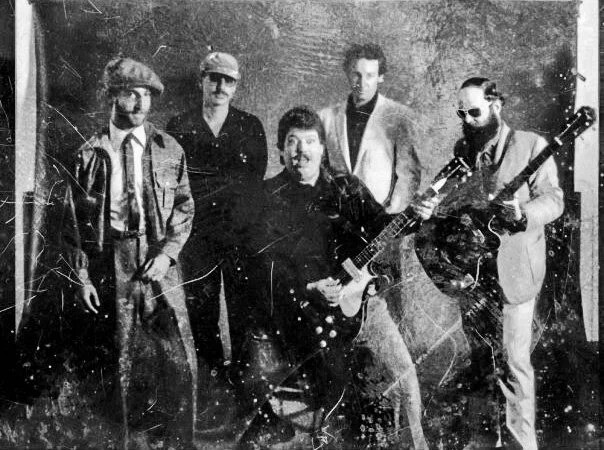
This guy was mentioned in the comments last week (he was playing guitar with the Blasters in a video I posted), and I was listening. A blues band that swung like they were on a chandelier… what an incredible band this was. When I write posts, sometimes I think of the readers who would like them. Christian is the one I’m thinking of here…I’m not a blues aficionado, but when I hear something great, no matter what it is…I play it. Rarely would I review a blues album, but this one is certainly worth it. His guitar playing took me by surprise.
I loved how they recorded this. The band recorded the album in Los Angeles, using vintage tube gear, ribbon microphones, and a minimalist mic setup to capture the warmth and air of those old 1950s records. They wanted it raw, live, and most importantly, human. No overdubs, no studio tricks, just five musicians facing each other and playing to each other.
If you were hanging around the Los Angeles blues scene in the mid-1970s, you might’ve seen a big fedora-wearing guitar phenom named Michael “Hollywood Fats” Mann. For a few short years, he led a group that reminded the world that the West Coast had some great blues. The band had a deep Chicago and Texas blues sound. The Hollywood Fats Band didn’t last long, but they left their mark.
Michael Mann was just out of his teens when he was already playing alongside blues legends. He was born in Los Angeles in 1954. He sat in with the likes of Muddy Waters, John Lee Hooker, and Albert King when they hit town. He had a tone straight out of Chess Records. By the time he met harmonica player Al Blake and pianist Fred Kaplan in the mid-1970s, the idea of forming a blues revival band that really sounded like the old days began to take shape.
The lineup was a dream team for blues purists: Hollywood Fats on guitar, Al Blake on harp and vocals, Fred Kaplan on piano, Larry Taylor (formerly of Canned Heat) on upright bass, and Richard Innes on drums. They were in the middle of the disco era, but they stuck stubbornly to jump blues, and it swung. The chemistry was electric. Fats’ guitar lines just rip off those recordings I’ve been listening to, and the entire band was just fantastic.
Their lone studio album, The Hollywood Fats Band (recorded in 1979 and released in 1980), sounded like it had been transported from a Chess Records session with better fidelity. Sadly, it didn’t end well. Hollywood Fats struggled with addiction, and just as his reputation was spreading beyond the clubs of L.A., he died in 1986 at only 32. The band members carried on, but it was never the same.
There is not much film on the guy…this is not a great quality video, but you take what you can.
…
 PowerPop... An Eclectic Collection of Pop Culture