

October 27, 1967 Season 1 Episode 5
If you want to see where we are…HERE is a list of the episodes.
I highly recommend this one. The episode is grounded in behavioral science, and there’s something very unsettling about this one. It’s a little too real. Number 6 awakens to discover he’s grown a mustache, his hair is darker, and he’s left-handed. Oh, and now he’s Number 12 (6+6 = 12). I like many of these episodes, but this might be my favorite episode. I do give some things away in this review; it’s hard not to with this one.
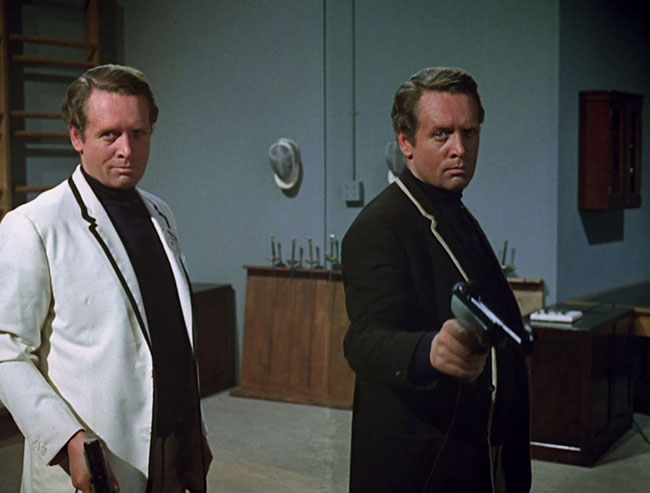
Having a character encounter their double is a common movie or television ploy (even two of the castaways on “Gilligan’s Island” met their doubles), but few examples are as effective as Number Six confronting his spitting, smirking image. It’s not just one of the best interrogation episodes but one of the best I’ve seen. Number 6 and Number 12 are going at it.
They try to break him by splitting his life in two. The Village creates a “new” Number Six who smiles, cooperates, and actually fits in, while the other one is treated like a problem. It’s about making Six doubt himself and making his resistance look like he’s insane.
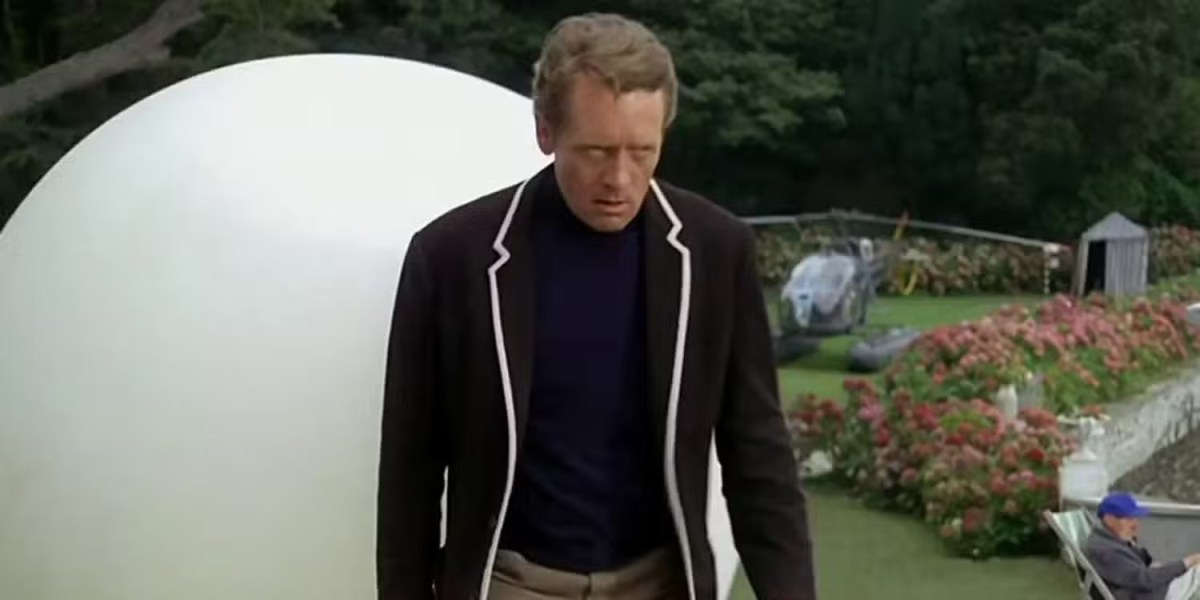
Number Six wakes up after being drugged and tampered with. When he awakens, he is not in his usual dwelling, and when he looks in a mirror, he sees his appearance has been altered with darker hair and a mustache. At the Green Dome, Number Two addresses him as ‘Number Twelve’, and acts as though he is on his side. Number Six is given his ‘orders’ to break himself! After having his hair dyed back to its original colour and the moustache shaved, Number Six returns to his original dwelling. Who should be in residence but…Number Six! Confused? Of course, the Number Six coming back is actually Number Twelve.
As he is released back into the Village, officials test him by placing him in situations meant to trigger his old defiant behavior. Each time, he hesitates or reacts differently, which convinces them the procedure worked. They assign him a new job and surround him with friendly villagers who reinforce his new identity. Meanwhile, viewers see the Control Room watching every move, adjusting the experiment as they go.
Over time, cracks appear. Small details bring back flashes of who he really is, and he begins to suspect the whole transformation is an act forced onto him. When the Village authorities push him too hard, his old instincts return. He confronts the people manipulating him and exposes that the “new identity” was created through psychological conditioning rather than real memory loss.
What makes this episode work is how it turns identity into a weapon. Number Six fights with logic and willpower, but he’s also fighting a system that is against him. The episode keeps the pressure on, then ends with the Village still ready for the next move.
This one was very hard to write up. It’s best to see it, and I think you will enjoy it. Some have ranked this as the top episode or at least in the top 3. Be Seeing You!
…

 PowerPop... An Eclectic Collection of Pop Culture