
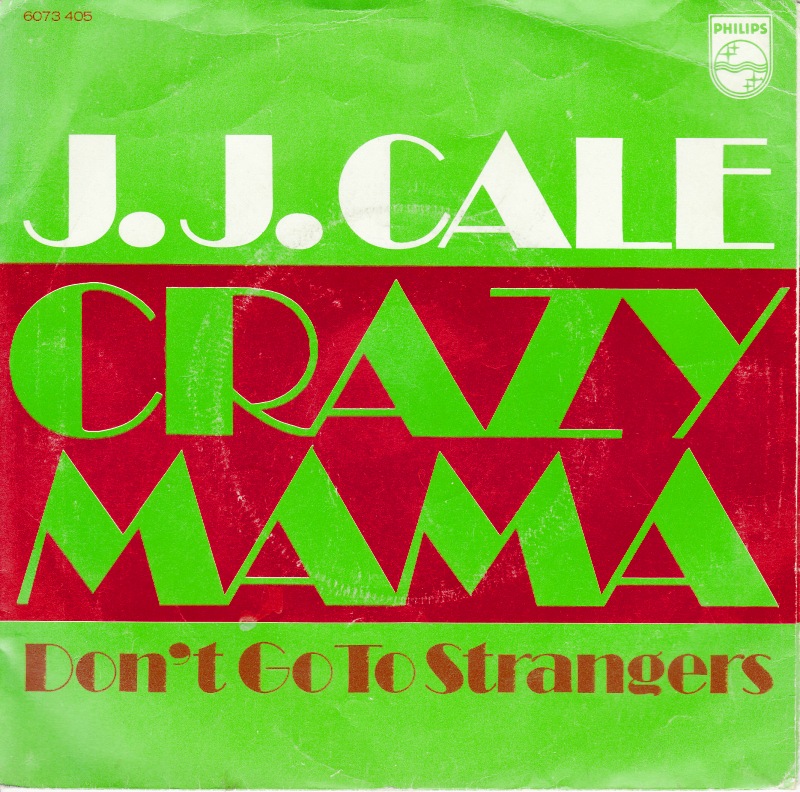
J.J. Cale – Crazy Mama

The thing that I’ve found about Cale is that his music isn’t in your face. It really sneaks up on you while you listen. I remember this getting played on AM radio when I was a kid, and this song introduced me to J.J. Cale. Yes I may have heard some of his songs that were covered by others, but I knew this by Cale and no one else. 

Oklahoma blues guitarist and songwriter J.J. Cale is best known for a number of songs that became radio favorites when covered by other artists. These include both After Midnight and Cocaine, which were written and recorded by Cale before Eric Clapton cut his versions. Also, Cale’s track Call Me The Breeze has been covered by numerous acts, most notably by Lynyrd Skynyrd.

The record feels loose, almost casual, like you just stumbled across him jamming in a Tulsa roadhouse. Yet the track is locked in tight, every note exactly where it needs to be. Musicians took notice; countless guitarists, from Mark Knopfler to Neil Young, would later cite Cale’s minimalism as an influence.

He made this hit song without raising his voice or speeding up this song. Remember this was the era of bombast, arena rock, prog, and wall-to-wall sound. Cale proved that restraint could be just as powerful. It’s no surprise that Clapton and others gravitated to his songs; Cale had a way of making music that felt timeless and genuine. This song may have been his only chart hit, but it wasn’t his only masterpiece.

Crazy Mama is a song from Cale’s debut album, Naturally, and was his only Top 40 hit in the US. Naturally peaked at #51

This song peaked at #22 on the Billboard 100 in 1971.

Crazy Mama

Crazy mama, where you been so long?
You’ve been hiding out, I know that’s true
Crazy mama, I sure need you
Crazy mama, where you been so long?

Standing on the corner, looking for you, babe
Lord have mercy, can I see,
that crazy mama coming back to me?
Crazy mama, where you been so long?
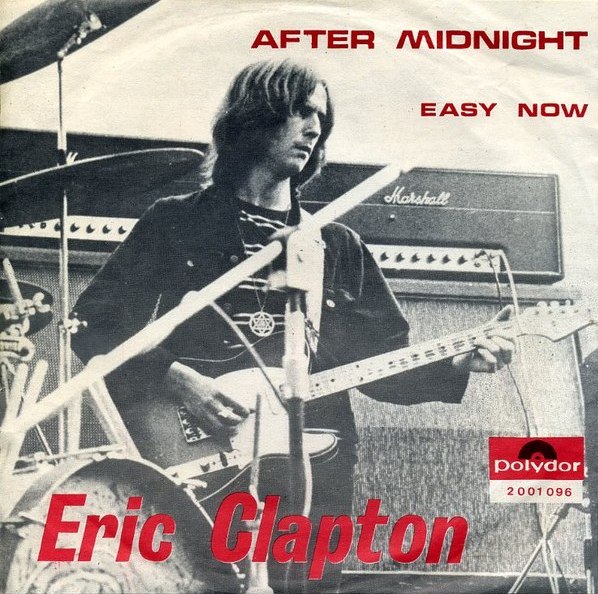
Eric Clapton – After Midnight ….Under The Covers Tuesday

We had Cream not long ago so we will progress to Eric today. I will say I did like Eric more with Cream.

This song was not an Eric Clapton-written song…it was written by the great J.J. Cale. Cale seemed to have an aversion to fame but he was thankful to hear Eric cover his song at the time. He said “I was dirt poor, not making enough to eat and I wasn’t a young man. I was in my thirties, so I was very happy. It was nice to make some money.” 

It was a much-needed windfall to an artist struggling in obscurity, and already into his 30s. He landed a deal on Leon Russell and Denny Cordell’s Shelter label and thought he had finished recording his first album for them, Naturally, when Cordell suggested he revisit this composition and share its limelight. When his album Naturally came out in 1971 it got played thanks in part to Clapton covering this song a year before.

Naturally - JJ Cale | Muziek, Jazz

J.J. Cale’s version of After Midnight on the album peaked at #42 on the Billboard 100 and I could not find it charting in Canada. His song Crazy Mama peaked at #22 on the Billboard 100.

Eric Clapton Album Cover.jpg

After Midnight was on Clapton’s self-titled debut album released in 1970. The album had some Clapton classics on it. Blues Power, After Midnight, and Let It Rain. The producer was Delaney Bramlett of the band Bonnie and Delaney that Clapton and George Harrison had played and toured with off and on. I like the album although I think it does sound a bit thin…no fault of Clapton.

The song peaked at #18 on the Billboard 100, #10 in Canada, and #17 in New Zealand in 1970.

Clapton released another, more mellow version of “After Midnight” in 1988 on his greatest hits compilation Crossroads. It was released as a single but did not chart. This 1988 version was used in commercials for Michelob beer. It’s odd that he would let them use it since he was in rehab in 1987 to get off of alcohol. Which to his credit he has supposedly been off of it since.

Eric Clapton:  “I wanted to go in the other direction and try to find a way to make it minimal, but still have a great deal of substance,” he told NPR. “That was the essence of J.J.’s music to me, apart from the fact that he summed up so many of the different essences of American music: rock and jazz and folk, blues. He just seemed to have an understanding of it all.”

After Midnight

After midnight, we’re gonna let it all hang down
After midnight, we’re gonna chug-a-lug and shout
We’re gonna stimulate some action
We’re gonna get some satisfaction
We’re gonna find out what it is all about
After midnight, we’re gonna let it all hang down

After midnight, we’re gonna shake your tambourine
After midnight, it’s all gonna be peaches and cream
We’re gonna cause talk and suspicion
We’re gonna give an exhibition
We’re gonna find out what it is all about
After midnight, we’re gonna let it all hang down

After midnight, we’re gonna let it all hang down

After midnight, we’re gonna shake your tambourine
After midnight, it’s all gonna be peaches and cream
We’re gonna cause talk and suspicion
We’re gonna give an exhibition
We’re gonna find out what it is all about
After midnight, we’re gonna let it all hang down

After midnight, we’re gonna let it all hang down