

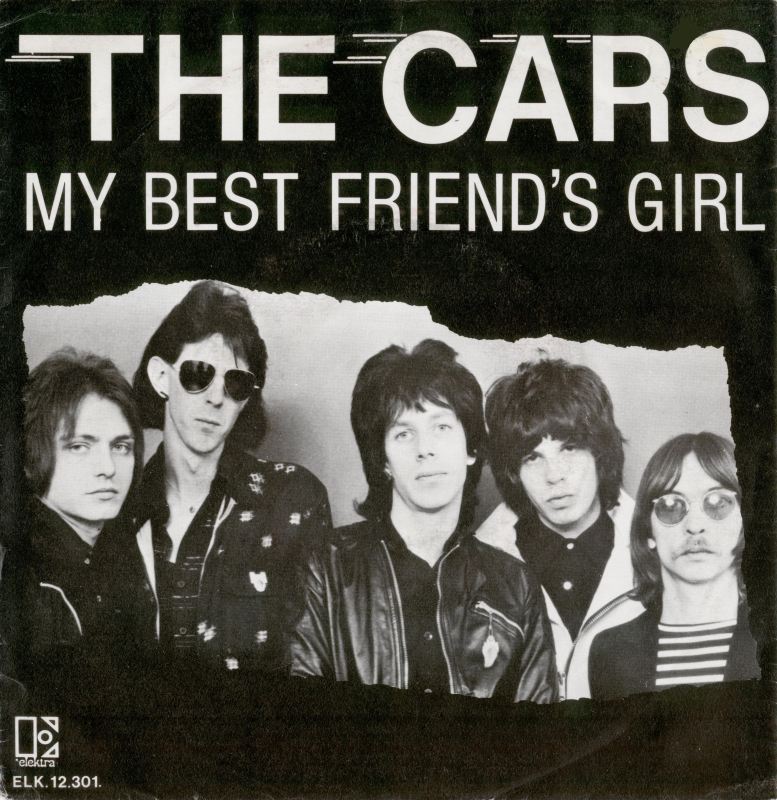
This song is from The Cars’1978 great debut album. This album has been known by fans as their “greatest hits.” It was one of the best debut rock albums ever released. It is a power pop masterpiece. They were all simple songs, but totally effective. The album contained Good Times Roll, My Best Friend’s Girl, Just What I Needed, Moving In Stereo, and Bye Bye Love. All of which still gets played.
This song is full of catchy hooks, but what makes it special to me is guitarist Elliot Easton’s rockabilly licks flowing through it. Ric Ocasek wrote and sang the song, which peaked at #44 in the Billboard 100, #3 in the UK, and #55 in Canada in 1978. Speaking of Elliot Easton, he was their secret weapon. The guy could have made any song catchy by just inserting his guitar licks.
The song sounds both old (Easton’s licks) and modern with Greg Hawke’s synthesizer in the background. Hawke would color a song but hardly ever take it over. It’s been covered by multiple artists, featured in films and TV shows, and still sounds fresh.
The album The Cars peaked at #18 on the Billboard Album Charts, #50 on the Canadian Album Charts, #29 in the UK, and in New Zealand it peaked at #5 in 1978. It seems New Zealand appreciated it much more and realized they were here to stay. They were one of the few power pop bands that had a somewhat long career. The two singers were usually Ric Ocasek (who was also the main songwriter) and bass player Benjamin Orr. Their voices were very similar.
Below, Ocasek explains how he wrote the song.
Ric Ocasek: Nothing in that song happened to me personally. I just figured having a girlfriend stolen was probably something that happened to a lot of people. I wrote the words and music at the same time: “You’re always dancing down the street / with your suede blue eyes / And every new boy that you meet / he doesn’t know the real surprise.” The “suede blue eyes” line was a play on Carl Perkins’s “Blue Suede Shoes.” When I wrote, “You’ve got your nuclear boots / and your drip-dry glove,” I envisioned the boots and gloves as a cool ’50s fashion statement.
With the last line of the chorus, “But she used to be mine,” you realize the guy didn’t steal his best friend’s girl—his friend stole her away from him.
My Best Friend’s Girl
You’re always dancing down the street
With your suede blue eyes
And every new boy that you meet
He doesn’t know the real surprise
Here she comes again
When she’s dancing ‘neath the starry sky
She’ll make you flip
Here she comes again
When she’s dancing ‘neath the starry sky
You kinda like the way she dips
She’s my best friend’s girl
She’s my best friend’s girl
And she used to be mine
You’ve got your nuclear boots
And your drip dry glove
And when you bite your lip
It’s some reaction to love
 PowerPop... An Eclectic Collection of Pop Culture