

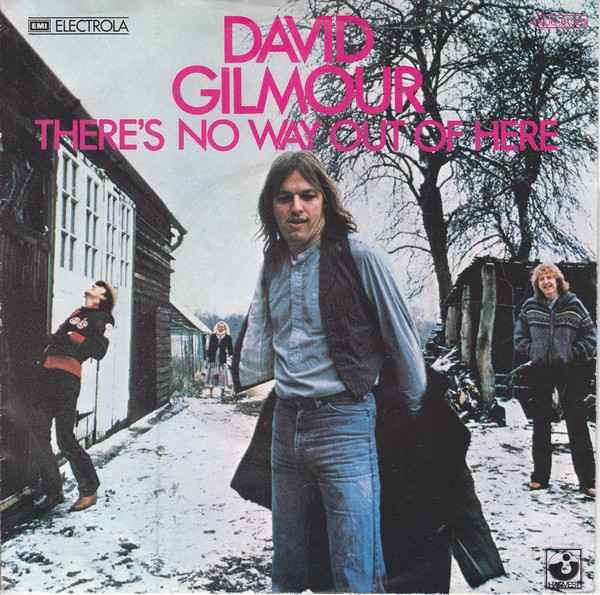
Gilmour is one of those guitarists who you know by his tone. That’s all it takes to recognize him playing without knowing it. In the 1980s, Paul McCartney released “No More Lonely Nights,” and I knew right away that he must have called David Gilmour to do the solo…and he did. Gilmour is like Hendrix in that regard; it’s not hard to pick out his sound.
I will admit, my favorite Pink Floyd music is the Syd Barrett years, although I do like some of the 1970s as well. Listening to Gilmour’s debut solo album, I’m really impressed. His songs were on point and not much wandering into Floyd land. Of course, you hear some; it’s hard not to with his voice.
When David Gilmour began work on his first solo album, David Gilmour, the idea made sense. He wanted a break from the structure and pressure that surrounded Pink Floyd in the 1970s. As he said, to establish his own identity outside of the “claustrophobic shadow of Pink Floyd.” The band had just finished the massive tour for Animals, and was entering a tense period that would lead to The Wall. Recording a solo record gave Gilmour a chance to work at his own pace and record songs that didn’t need to fit a concept.
Some songs came from outside writers. This song was written by Ken Baker and had first appeared on a record by the British country-rock group Unicorn. Gilmour liked the song and reshaped it with a heavier guitar sound and a slower feel to fit him perfectly. Once he puts that guitar on a song, it becomes a Gilmour song.
The songs on this album were shorter and more straightforward. The guitar stayed at the center of the sound. It didn’t try to compete with the HUGE scale of Pink Floyd’s records. Over time, the album has come to be seen as a snapshot of where he was just before the The Wall era began.
The album peaked at #17 in the UK, #29 on the Billboard Album Charts, and #22 in New Zealand in 1978.
There’s No Way Out of Here
There’s no way out of hereWhen you come inYou’re in for goodThere was no promise madeThe part you playedThe chance you took
There are no boundaries setThe time and yetYou waste it stillSo it slips through your handsLike grains of sandYou watch it goThere’s no time to be lostYou’ll pay the costSo get it right
There’s no way out of hereWhen you come inYou’re in for good
And never was there an answerThere an answerNot without listeningWithout seeing
There are no answers hereWhen you look outYou don’t see inThere was no promise madeThe part you playedThe chance you took
There’s no way out of hereWhen you come inYou’re in for good
And never was there an answerThere an answerNot without listeningWithout seeing
There’s no way out of hereWhen you come inYou’re in for goodThere are no answers hereWhen you look outYou don’t see in
There was no promise madeThe part you playedThe chance you took
(When you come in)(You’re in for good)

 PowerPop... An Eclectic Collection of Pop Culture