

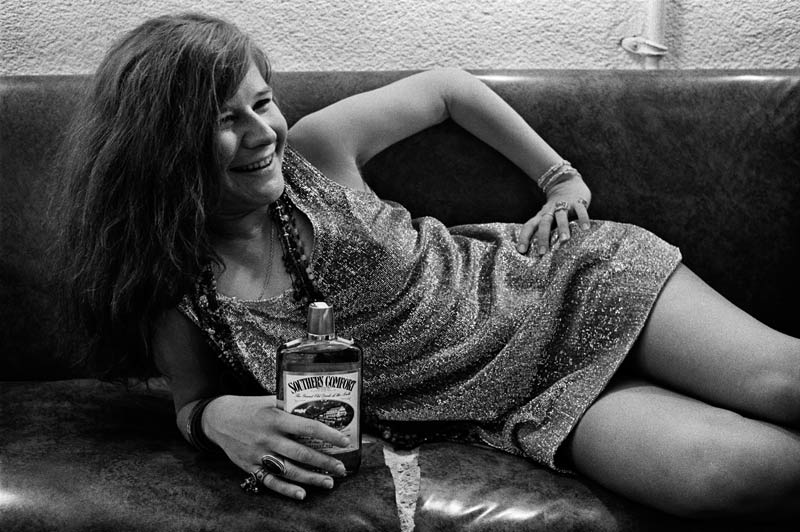
I wrote this for Randy’s site for a series he is having called “Herstory.” Here is the criteria:
We have laid out three criteria to focus on women in music. Each article will include one or more of these.
Songs written by men but sung by a woman with a female POV.
Songs written by a woman and sung by themselves or for/with another woman
Collaborative efforts. Written with input from both a woman and a man but sung by a woman.
First of all, I’m honored to be part of this and to be asked by Randy. Thank you for posting this last week. My posts are usually personal, and this one won’t be any different, unfortunately. It’s the only way I know how to write. I could never be a critic because I’m too much of a fan.
When Janis Joplin recorded this song, it wasn’t meant to be the centerpiece of the album. The song, written by Kris Kristofferson, had already been around the country and folk circuits, covered by Roger Miller and others. Joplin cut her version in 1970 during sessions for Pearl, not long before her death. She injected life into this song. The lyric about losing love and finding freedom sounded like something she had lived rather than learned.
Me and Bobby McGee quickly became Joplin’s signature song. This was a slightly different vocal for Janis. There is more control in her voice in this one. The producer Paul A. Rothchild was working with Janis to use her voice more efficiently so she could continue to sing later on in her career. Unfortunately, she never got a chance.
The Full Tilt Boogie Band keeps it simple behind her, soft rhythm, light piano, no clutter. That space lets Joplin carry the whole thing. She starts gently, almost timidly (for her), then slowly lets her voice go. The dynamic is incredible to hear, and it never gets old. By the final verse, it feels less like singing and more like remembering. It’s the sound of someone in pain. You feel that pain with Janis; you ALWAYS felt pain with Janis.
Plenty of artists have covered this song. Janis Joplin lived it for just four minutes, but those 4 minutes have turned into 56 years and counting. Kristofferson wrote a strong song, but Joplin turned it into an epic masterpiece. It isn’t about the road, or even about Bobby. It’s about how freedom can feel empty when the person you shared it with is gone. That’s why her version stayed, and the others faded. Without knowing it, she put a claim on that song, and she owns it like no other ever will.
This was Janis Joplin’s only top ten hit, although her songs are still played today. This was released after Joplin passed away. Her death gave the album a lot of attention, and Pearl went to #1 on the Billboard Album Chart in 1971. It was the second song to hit #1 in the US after the artist had died. Dock Of The Bay by Otis Redding was the first. Janis idolized Otis, so she would probably have liked that.
Kris Kristofferson: “I had just gone to work for Combine Music. Fred Foster, the owner, called me and said, ‘I’ve got a title for you: ‘Me and Bobbie McKee,’ and I thought he said ‘McGee.’ I thought there was no way I could ever write that, and it took me months hiding from him because I can’t write on assignment. But it must have stuck in the back of my head. One day I was driving between Morgan City and New Orleans. It was raining and the windshield wipers were going. I took an old experience with another girl in another country. I had it finished by the time I got to Nashville.”
“For some reason, I thought of La Strada, this Fellini film, and a scene where Anthony Quinn is going around on this motorcycle and Giulietta Masina is the feeble-minded girl with him, playing the trombone. He got to the point where he couldn’t put up with her anymore and left her by the side of the road while she was sleeping. Later in the film, he sees this woman hanging out the wash and singing the melody that the girl used to play on the trombone. He asks, ‘Where did you hear that song?’ And she tells him it was this little girl who had showed up in town and nobody knew where she was from, and later she died. That night, Quinn goes to a bar and gets in a fight. He’s drunk and ends up howling at the stars on the beach. To me, that was the feeling at the end of ‘Bobby McGee.’ The two-edged sword that freedom is. He was free when he left the girl, but it destroyed him. That’s where the line ‘Freedom’s just another name for nothing left to lose’ came from.
“The first time I heard Janis Joplin’s version was right after she died. Paul Rothchild, her producer, asked me to stop by his office and listen to this thing she had cut. Afterwards, I walked all over L.A., just in tears. I couldn’t listen to the song without really breaking up. So when I came back to Nashville, I went into the Combine [Publishing] building late at night, and I played it over and over again, so I could get used to it without breaking up. [Songwriter and keyboardist] Donnie Fritts came over and listened with me, and we wrote a song together that night about Janis, called ‘Epitaph’.

 PowerPop... An Eclectic Collection of Pop Culture
I am so very pleased to be working with you again Max. I am happy to report this followed by Lisa’s post in this series have been my most popular in months! Janis is really a perfect example of a woman who carved her own way in an industry filled with obstacles. Thanks for reposting.
LikeLiked by 2 people
Randy, I’d posy this on your site but comments to the introductory message are closed.
This is an excellent idea. I’m looking forward to the writings and the selections. You have a similar idea of writing about women who performed songs by women, including themselves. Here are a few lesser known names that I hope get included: Laura Nyro, Joy of Cooking (Toni Brown is an excellent songwriter), Holly Near, Cris Williamson, Tracy Nelson.
LikeLiked by 1 person
Sorry for butting in here Max! Thank you very much and my apologies- but I close comments after a few weeks as I was getting a lot of spam and troll comments on older posts. The names Holly Near, and Cris Williamson and not familiar. Laura is one of my favorite writers.
LikeLiked by 1 person
Thank you Randy it was my pleasure and I always enjoy talking about Janis.
LikeLiked by 1 person
Max, this is exceellent.
LikeLiked by 1 person
Thanks!
LikeLike
I never linked Me and Bpbby McGee and LA Strada together. What a fascinating idea. Not that I took much more from LA Strada than some of those images, and they have been with me forever.
LikeLike
I did not know the song arose from La Strada. I just put the film on my Kanopy list. With a rainy day, I may end up watching it this afternoon.
The way people identify the song with Joplin and not Kristofferson is a lot like Respect with Franklin and Redding.
LikeLiked by 3 people
I have it on mine as well now and I hope to see it soon.
I agree…it’s Janis’s song.
LikeLiked by 1 person
The movie is full of incredible images that will (note the certainty there) fire the imagination. I know it has done so for me, and it must be thirty years since the last time I saw it. Don’t ask me about plot, I don’t recall. But those images last a lifetime.
LikeLiked by 1 person
I dunno. Aretha and Otis may have recorded the same song as it appears on the sheet music but their versions are very different. Both classic, both timeless and both incredible.
Whenever I think back to Aretha’s performance in The Blues Brothers, while I can’t argue with using “Think” I know the overall performance is more “Respect.”
LikeLiked by 1 person
I grew up on Gordon Lightfoot’s version……..but as I’ve gotten I’ve come to appreciate Joplin’s version…my introduction to her was Piece of My Heart….she’s an interesting soul and peoples impression. so many try to polish her off – example is that character in Across the Universe – but raw……as for a woman covering a Chris Smither’s tune, Bonnie Raitt, Love me like a Man…….I guess her version amongst many (has anyone not covered this) Love has no Pride (yeah I know written by Eric Kaz and Libby Titus)
LikeLiked by 3 people
There are some great ones out there and I like those examples.
Yea something about Janis really resonates with me…
LikeLike
I love Lightfoot’s version, and have always shared a giggle with friends (in absentia) who years ago couldn’t help pointing out how Lightfoot mispronounced Salinas.
LikeLike
Well-written, Max, and a song she really did well and made her own. Rather oddly, I’ve heard her version since I was a kid but didn’t hear Gordon Lightfoot’s …up in Canada. More odd, I do hear Gordon’s frequently down here now, and I like his version a lot too.
LikeLiked by 1 person
I guess the point is…it will probably be remembered by her the most I would say. It’s fun covering any song by her.
LikeLiked by 1 person
oh no doubt, it was her only very big chart hit and the only version of it that was a legitimate hit single. And one which deserved to be one, too. But it is weird , with me listening to Toronto radio growing up that I didn’t hear Gordy’s version… songs like ‘Beautiful’, ‘Rainy Day People’ and ‘The circle is small’ (besides the universal hits ‘If you could read my mind’, ‘Sundown’ and ‘…Edmund Fitzgerald’) were massive up there but barely recognized here
LikeLiked by 1 person
Yes that is true about Gordon no doubt for some stupid reason…Carefree Highway would probably be known as well.
LikeLike
In 1968 or 1969 at NYC’s Chelsea Hotel, Janis Joplin met Leonard Cohen in an elevator, mistaken him for Kris Kristofferson, and they spent the night together.
LikeLiked by 2 people
Yea that one I read! I’m jealous…Janis wasn’t model looking but that was alright…
LikeLiked by 1 person
LOVE Janis ❤️
LikeLiked by 1 person
You and me buddy!
LikeLiked by 1 person
Great song, stellar interpretation.
LikeLiked by 1 person
nice
LikeLiked by 1 person
Fantastic posting Max. More!
LikeLiked by 1 person
Thank you Bruce…I just remembered you are a Janis fan as well. I really love that woman.
LikeLiked by 1 person
Janis and her Southern Comfort. Interesting insight on the inspiration for the song. Her epitaph indeed.
LikeLiked by 1 person
Funny how, like a confirmed bachelor, a song has dated lots of people and then suddenly finds its soulmate.
LikeLiked by 2 people
That is a beautiful way to put it Mitch…I wish I would have thought of that.
LikeLiked by 1 person
Great post, Max. She made that song hers. That Southern Comfort was some nasty stuff, so I assume it was just for the buzz. I met her once in 1969 and was taken aback by how tiny and unassuming she was, and by all that talent coming from that little body. Kris said he wrote it for no one in particular, but later realized it had always been for her. Roger Miller also cut a good version.
LikeLiked by 1 person
Thanks Phil! I’m so jealous of you meeting her… her and Aretha are my two favorite female voices…she could wail and sing soft when she wanted to. She was just learning her voice when she died…
LikeLiked by 1 person
Very polite and so very Texan, the 100-degree heat didn’t phase her at all.
LikeLiked by 1 person
Another bit of musical nonsense to digest: Aretha Franklin was offered the song ” Son Of A Preacher Man” but wasn’t wild about it, even though she was the daughter of a preacher. We all know that Dusty Springfield was offered the song, and yet unknown, owned it and it made her career. I was offered ” Brown Shoes Don’t Make It”, but basically wore tennis shoes at the time or Beatle boots, so Frank took it and we know what happened after that.
LikeLiked by 1 person
Dang Phil…you could have been a contender!
LikeLiked by 1 person
“like something she lived rather than learned…” I love that, Max. She had an amazing voice. I liked reading the backstory about Kris writing the song.
LikeLiked by 1 person
I’m simply in love with Janis’s work. So this is not without bias lol… Kris was such a great songwriter
LikeLiked by 1 person
So true!
LikeLiked by 1 person