

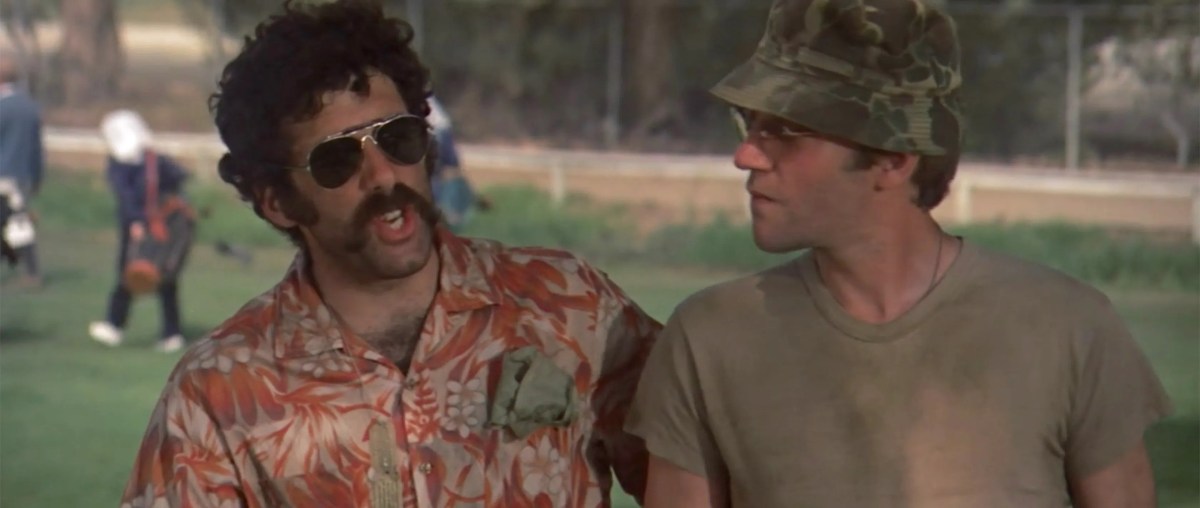
I pulled out this 1970 movie the other day and ended up enjoying it even more than I did years ago. When I first saw it back in the ’80s, I’d been expecting something different because of the television show. At first, I was confused, but the longer I watched, the more it thrilled me. If you only know MASH from television reruns with Alan Alda smirking through battlefield banter, the 1970 film that started it all might feel like a grenade lobbed into your expectations.
Robert Altman’s MASH isn’t a gentle sitcom. It’s raw, irreverent, chaotic, and somehow all the better for it. This is the war movie for people who hate war movies. It doesn’t glorify anything. It just throws you into the blood, the absurdity, and the humor of a Mobile Army Surgical Hospital during the Korean War, but let’s be real, this is Vietnam by another name. They just couldn’t say it at the time.
What strikes you about the movie is that it looks real. You don’t see a nice clean Army camp; you see authentic rubble, which captures the hopelessness of it all. Altman shot this film like a jazz improvised session. Overlapping dialogue, handheld cameras, and actors wandering through the frame like no one gave them a blocking direction. It feels messy because it is messy. War is messy. And MASH knows that the only way to survive it might be to laugh, so you forget where you are.
The plot? Loosely structured at best. You follow a pair of too-smart-for-their-own-good surgeons, “Hawkeye” Pierce and “Trapper” John McIntyre, as they drink, prank, operate, and generally wreak havoc behind the front lines. And when I say wreak havoc, I mean mocking authority, goading a desk jockey into a breakdown, and broadcasting a fake-suicide funeral for a lovesick dentist.
The cast, Donald Sutherland (Hawkeye), Elliott Gould (Trapper John), Tom Skerritt (Duke), and Sally Kellerman (Hot Lips Houlihan), weren’t exactly marquee names in 1970. Allegedly, Sutherland and Gould, suspicious of Altman’s loose approach, actually tried to get him fired during production. They failed. Years later, they admitted Altman was right all along.
Altman’s rebellious methods created friction with the studio, too. He refused to follow the traditional film shooting formula. He shot scenes with actors talking over one another, dismissed explanations, and downplayed narrative story arcs. Altman called it “anti-movie making,” and it became his signature style.
And that theme song? “Suicide Is Painless.” Written by Altman’s 14-year-old son, no less. A haunting lullaby for the down-and-out, it creeps under your skin and stays there long after the credits roll. The movie was based on a novel written by former military surgeon Richard Hooker.
- Hotlips O’Houlihan: [referring to Hawkeye] I wonder how a degenerated person like that could have reached a position of responsibility in the Army Medical Corps!
- Father Mulcahy: He was drafted.
…
 PowerPop... An Eclectic Collection of Pop Culture