

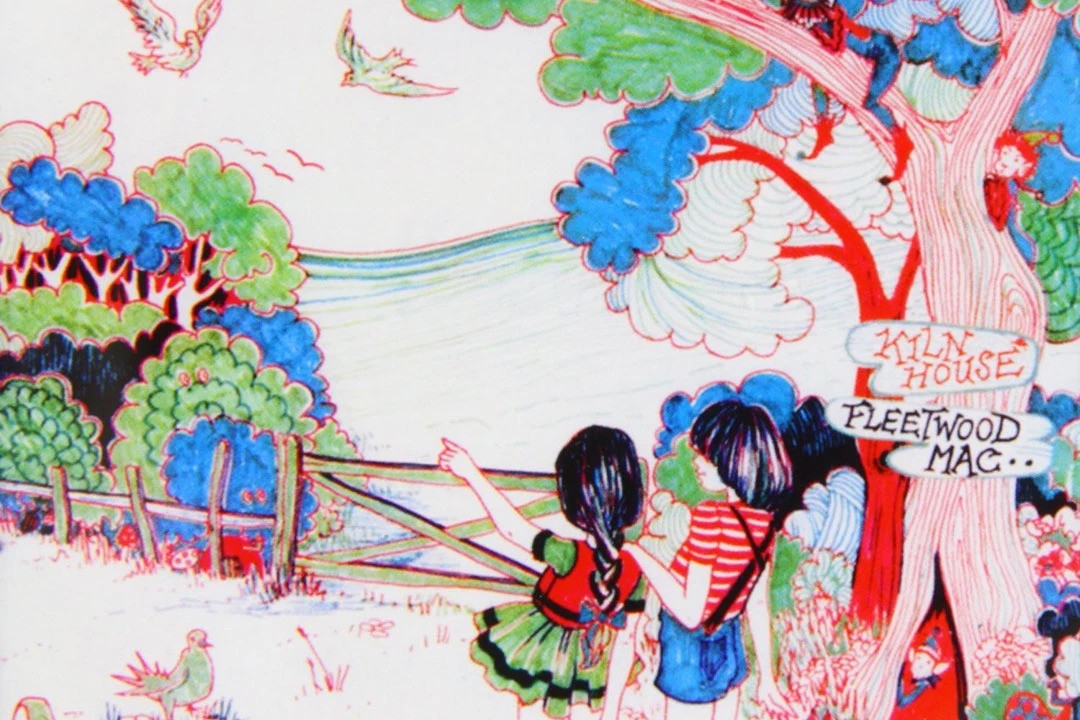
When most folks hear the words Fleetwood Mac, they immediately think of the Rumours-era band. But rewind just a few years earlier and you’ll find a very different band, one still rooted in the blues, still searching for direction after the departure of founding guitarist Peter Green. Starting that transitional phase is the album Kiln House.
Fleetwood Mac was changing throughout the decade, but 1970s Kiln House was one of their strangest detours. After Peter Green’s sudden exit, the band found itself leaderless. Instead of breaking up, Jeremy Spencer and Danny Kirwan took the lead and led the band through a melodic 1950s-inspired sound with that glorious echo. The entire album isn’t that, but it’s a heavy influence.
This is one of the most interesting bands ever. You can find a song in one of their many eras to satisfy anyone. This album was a departure from the Peter Green era. It didn’t have the intensity that Green brought, but it made up for it in some great songs. It was highly melodic with some complicated melodies, like Station Man (written by Danny Kirwan, Spencer, and John McVie); the later incarnation picked up on that song as well. The first song of this period I took notice of a few years ago was Jewel Eyed Judy from this album.
Jeremy Spencer adored that 1950s rock style, and This Is the Rock is one of his tributes to that era. Another obvious one is the song Buddy’s Song. They also had some nice straight-out rock on the album with Kirwan’s Tell Me All the Things You Do.
This album ties the eras together for me. You had straight out rock, a touch of blues, rockabilly, country, and some pop that foreshadowed what was to come. It is probably the most varied Fleetwood Mac album I’ve listened to. You can hear Fleetwood Mac going toward something new.
The album peaked at #69 on the Billboard Album Charts, #67 in Canada, and #39 in the UK. Christine McVie not only drew the cover, she also contributed to the album with backup vocals, keyboards, and even cover art. After this album, she became a full member.
This Is The Rock
This is the rockWe’ve been talking about (this is the rock)Yeah, this is the rockMakes you jump and shout (this is the rock)This is the rockThat knocks you right out
It makes you loseAll your troubles and caresYou’ll lose your bluesThey ain’t going nowhereThis is the rockThat hits you right there
Well you can get back on the roofAnd shout it all aroundGet up off your seats is what I’m putting downGet ’em all a hoppin’ to that crazy beatGet ’em all a boppin’ and a tappin’ their feet
‘Cause it’s the rockMoves you all day long (it’s the rock)Yeah, it’s the rockGettin’ everyone (it’s the rock)This is the rockIt really turns you on, woo
Well you can get back on the roofAnd shout it all aroundGet up off your seats is what I’m putting downGet ’em all a hoppin’ to that crazy beatGet ’em all a boppin’ and a tappin’ their feet
‘Cause it’s the rock (it’s the rock)Moves you all day long (it’s the rock)Yeah, yeah it’s the rockGettin’ everyone (it’s the rock)This is the rockIt really turns you on
Yeah, this is the rockIt really turns you onThis is the rockIt really turns you on
Well this is the rock

 PowerPop... An Eclectic Collection of Pop Culture